Recap:
• Tree removal is typically necessary when a tree is dead, structurally unstable, diseased beyond recovery, or positioned too close to structures or power lines.
• In Pound Ridge, NY, a town permit may be required before removal depending on trunk diameter, slope, and proximity to wetlands or property lines.
• Professional assessment helps determine whether removal, pruning, or cabling is the safer and more cost-effective option.
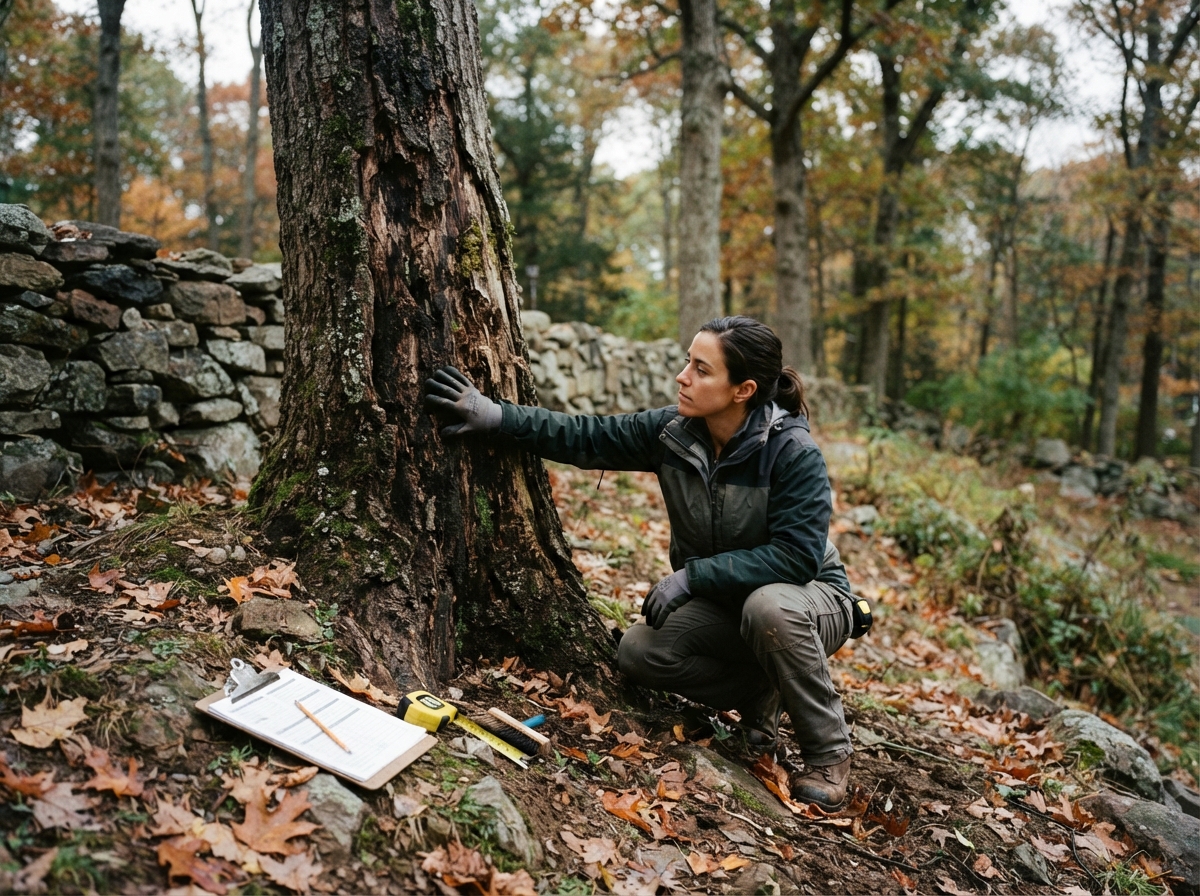
A tree generally needs to come down when it is dead, severely diseased, leaning dangerously, or growing close enough to a structure, driveway, or power line to create an ongoing safety risk. Determining this isn’t always straightforward, which is why many homeowners request a professional evaluation before deciding between tree removal, pruning, or cabling support.
Several warning signs point toward removal rather than routine maintenance:
• Large dead branches or a bare, leafless canopy during the growing season
• Visible fungal growth, cavities, or cracks running along the trunk
• Root damage from construction, flooding, or soil erosion
• A noticeable lean that has developed or worsened recently
• Peeling bark exposing extensive decay underneath
Any of these conditions can mean the tree has lost the structural integrity needed to withstand wind or storm loads safely.
Permit Rules That Affect Tree Removal in Pound Ridge, NY
Pound Ridge regulates tree removal under its Tree Preservation ordinance, and homeowners should confirm permit requirements before cutting. According to the Town of Pound Ridge’s code, a tree removal permit is required before certain cutting activities, and applications are filed with the Building Inspector along with a fee set by the Town Board.
Permit thresholds generally depend on tree size and location:
• Living trees six inches in diameter or greater may need a permit on slopes exceeding 15 percent, within 25 feet of a property line, or inside wetland setbacks
• Specimen trees 24 inches or larger in diameter may require a permit regardless of location
• Activity within 150 feet of a wetland or water body falls under additional Water Control Commission review
Because Pound Ridge includes steep terrain, rock outcroppings, and wetland corridors near protected natural areas, a larger share of residential lots fall within these regulated zones than in flatter communities. Homeowners planning removal work should check with the Town Building Department before scheduling a crew to avoid delays or fines.
Removal vs. Alternatives: Choosing the Right Approach
Not every damaged or overgrown tree needs to be cut down. A side-by-side look at common options can clarify when removal makes sense versus when a less invasive step is sufficient.
| Situation | Likely Approach | Typical Outcome |
| Dead or structurally failing trunk | Removal | Eliminates fall hazard entirely |
| Minor decay with sound structure | Cabling or bracing | Extends tree life, reduces risk |
| Overgrown or crowded canopy | Pruning | Improves health without removal |
| Disease confined to one limb | Selective pruning | Stops spread, preserves tree |
A certified arborist or licensed tree service can inspect trunk integrity, root stability, and canopy health to recommend the least disruptive option that still addresses the safety concern.
What to Expect During a Removal Job
A typical residential tree removal follows a predictable sequence:
1. Site assessment to confirm permit status and identify obstacles like fences, utility lines, or structures
2. Setting up rigging or rope systems for controlled, sectional cutting near buildings
3. Felling or dismantling the tree in pieces, starting from the canopy downward
4. Grinding or removing the stump if requested
5. Clearing and hauling debris from the property
Larger or hazardous removals near power lines typically require more specialized equipment and additional safety precautions than a straightforward open-yard removal.
Based in Bedford Hills, NY, Jeovany’s Tree Service is a licensed tree and landscaping contractor that serves properties across Pound Ridge, NY.
Frequently Asked Questions
Does a dead tree always need a permit before removal? Permit requirements in Pound Ridge depend on trunk diameter, slope, and proximity to property lines or wetlands, so a dead tree may still require town approval even though it poses a hazard.
How long does a tree removal permit take in Pound Ridge? Processing times vary by application volume and site complexity; the Building Inspector’s office can provide current timelines for a specific property.
Can a leaning tree be saved instead of removed? Sometimes. Cabling or bracing can stabilize a tree with a moderate lean if the root system and trunk remain structurally sound, though severe leans usually indicate removal is the safer choice.
Who enforces tree removal rules near wetlands in Pound Ridge? The Building Inspector oversees general tree removal permits, while the Water Control Commission reviews activity within regulated wetland buffer areas.
Next Steps for Property Owners
Published service area details for Jeovany’s Tree Service are available for homeowners reviewing options in the region.