Short answer:
- Commercial asphalt installation involves grading, base preparation, paving, and compaction, while repair addresses cracks, potholes, and drainage issues before they worsen.
- Regular sealcoating and crack sealing extend pavement life and reduce long-term repair costs for parking lots and commercial lots.
- Climate and soil conditions in Houston, TX affect how often repairs or resurfacing are needed.
Property managers and business owners often search for guidance on maintaining parking lots, driveways, and loading areas because pavement failure can disrupt operations and create liability concerns. Commercial asphalt services typically cover new installation, resurfacing, patching, and preventive maintenance designed to keep high-traffic surfaces functional for vehicles and pedestrians. Understanding the installation process and common repair triggers helps property owners plan maintenance budgets and avoid costly emergency fixes.
How Commercial Asphalt Installation Works
New asphalt installation follows a sequence that determines how long the surface will perform under daily traffic loads.
- Site evaluation and grading to establish proper drainage slopes.
- Excavation and removal of unsuitable soil or old pavement.
- Base layer compaction using crushed stone or aggregate.
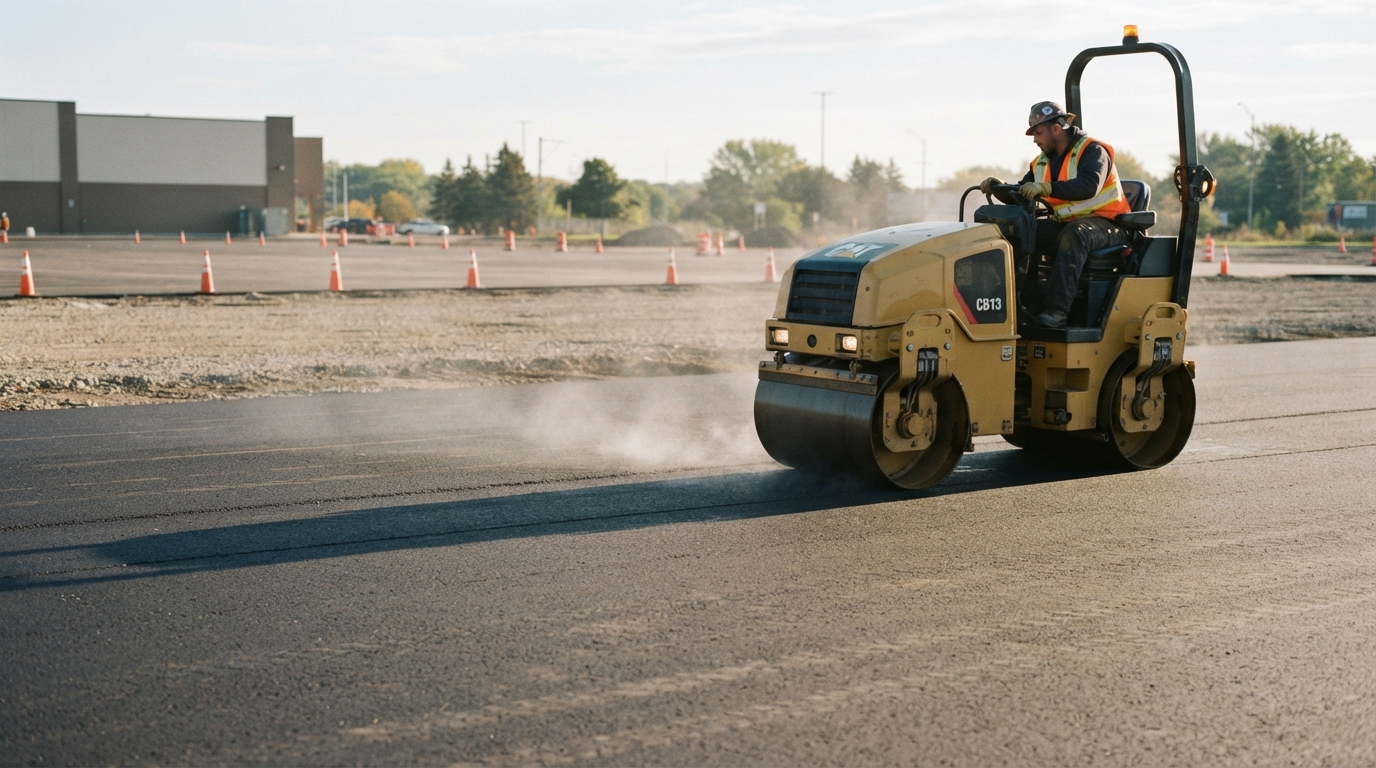
- Hot-mix asphalt application in one or more lifts, followed by rolling and compaction.
Each step affects the finished surface. Skipping base preparation or inadequate compaction are common reasons pavement fails years before it should, according to general pavement engineering guidance from the Federal Highway Administration. Property owners evaluating bids should ask contractors about base depth and compaction testing, since these details are not always visible once paving is complete.
Common Repair Needs for Commercial Lots
Commercial lots in Houston, TX experience heavy seasonal rainfall and high summer temperatures, both of which accelerate pavement wear. Repeated moisture intrusion and heat cycling contribute to several recurring problems:
- Alligator cracking from base failure or fatigue under repeated loads.
- Potholes forming after water penetrates cracks and weakens subsurface layers.
- Drainage pooling where grading has settled unevenly over time.
- Faded or worn striping that reduces visibility for traffic flow and ADA compliance.
Addressing cracks while they are still minor through crack sealing is generally less expensive than waiting for full-depth repairs. Patching isolated potholes promptly also prevents the surrounding pavement from deteriorating further.
Installation vs Repair: Choosing the Right Approach
Deciding between a full installation, resurfacing, or targeted repair depends on the extent of damage and the remaining life of the existing base.
| Approach | Best For | Typical Lifespan Added |
|---|---|---|
| Crack sealing | Minor surface cracks, early-stage maintenance | 1-2 years |
| Patching | Isolated potholes or small damaged sections | 2-4 years |
| Resurfacing (overlay) | Worn surface with a stable base underneath | 7-10 years |
| Full reconstruction | Failed base, extensive cracking, or drainage failure | 15-20 years |
A pavement condition assessment is the most reliable way to determine which category a lot falls into before committing to a repair budget.
Maintenance Planning for Property Owners
Routine maintenance scheduling reduces the likelihood of sudden, high-cost repairs. Sealcoating every two to three years protects against UV exposure and water penetration, while periodic inspections catch small cracks before they expand. Property managers overseeing multiple commercial sites often coordinate maintenance on a rotating schedule to spread costs across budget cycles rather than addressing every lot at once.
Based in Tomball, TX, Click here for commercial asphalt services serves commercial properties across Houston, TX, including parking lots, access roads, and loading areas that require routine paving and repair work.
Frequently Asked Questions
How often should a commercial parking lot be resealed? Most commercial lots benefit from sealcoating every two to three years, depending on traffic volume and sun exposure.
What causes potholes to form so quickly in Houston, TX? Heavy rainfall combined with high heat accelerates moisture intrusion into cracked pavement, weakening the base layer beneath the surface.
Can repairs be done without closing an entire parking lot? Many patching and sealcoating projects are scheduled in sections or during off-hours to limit disruption to business operations.
Is resurfacing cheaper than full reconstruction? Resurfacing is generally less expensive than reconstruction, but it only works when the existing base is still structurally sound.
Next Steps for Pavement Assessment
Current scheduling and service area information for Click here for commercial asphalt services is published for commercial properties in the surrounding region.