Briefly:
• Professional LED lighting installation covers residential, commercial, and industrial properties, replacing outdated fixtures with energy-efficient systems designed for the space.
• A qualified assessment identifies the right fixture type, placement, and controls before any wiring or mounting work begins.
• Local climate, housing stock, and permitting requirements in New Orleans, LA shape how installation projects are planned and executed.
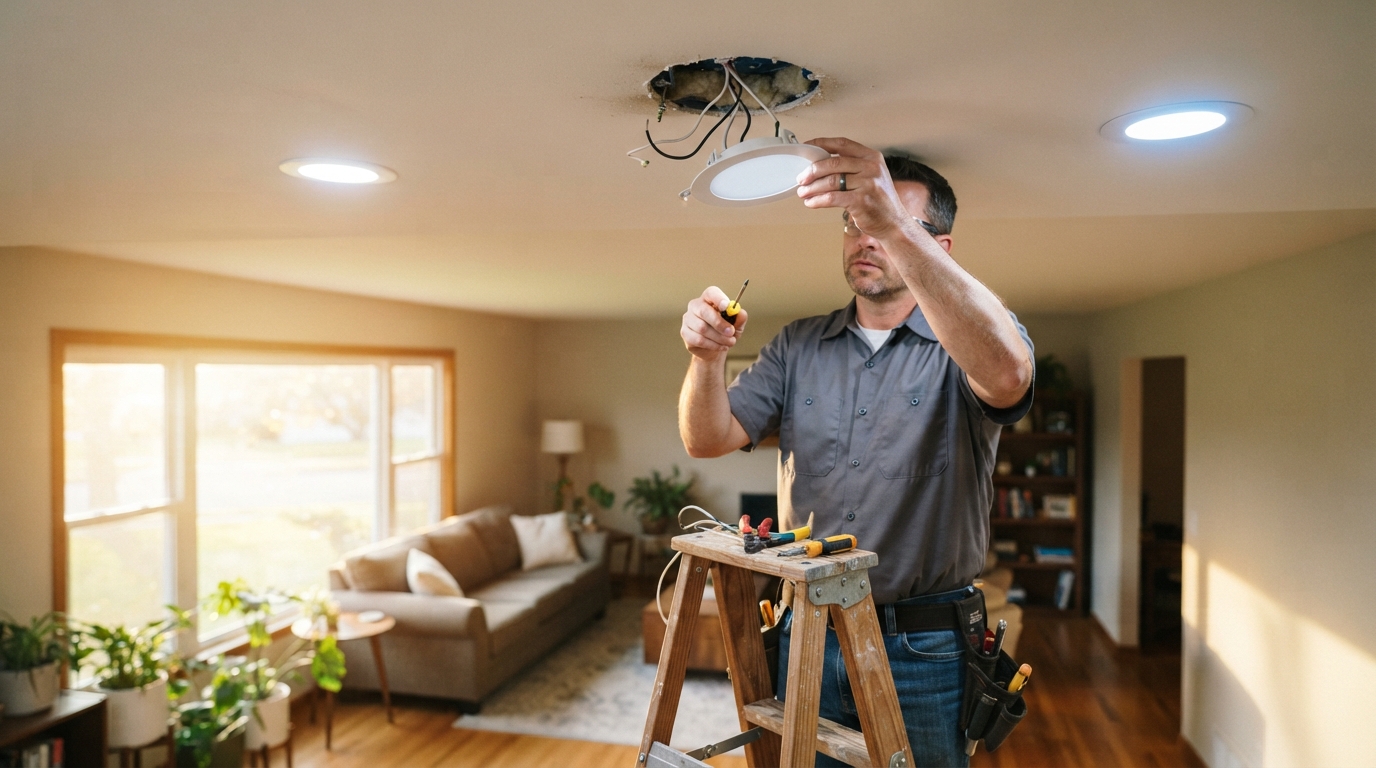
Professional LED lighting installation refers to the planned assessment, fixture selection, and electrical work involved in replacing or adding energy-efficient lighting in a home or business. It typically includes an onsite evaluation, product specification, and coordinated installation rather than a simple bulb swap.
Property owners researching LED Lighting Installation are often comparing outdated incandescent or fluorescent systems against newer LED options that reduce long-term energy use. According to the U.S. Department of Energy, LEDs use at least 75 percent less energy than incandescent bulbs, emit virtually no heat, and last 25 times longer. That efficiency difference is a primary reason both homeowners and facility managers pursue professional installation rather than piecemeal fixture replacement.
What Professional Installation Actually Involves
A proper LED retrofit is not limited to unscrewing old bulbs and inserting new ones. It generally follows a sequence that accounts for electrical compatibility, fixture type, and the intended use of each space.
1. Site assessment – An electrician or lighting technician reviews existing wiring, fixture types, and lighting goals for each room or area.
2. Product specification – Fixtures are selected based on brightness needs, color temperature, and whether dimming or smart controls are desired.
3. Installation and wiring – Qualified personnel handle mounting, wiring connections, and any panel or circuit adjustments required.
4. Testing and walkthrough – Completed work is checked for proper function, including dimmer compatibility and smart home integration where applicable.
Interior upgrades commonly include tube lights, household bulbs, recessed lighting, and more, while some projects extend to outdoor and landscape fixtures for walkways or architectural features.
Residential, Commercial, and Industrial Differences
Installation scope varies significantly depending on property type. The table below outlines general differences in typical project focus.
| Property Type | Common Focus | Typical Considerations |
| Residential | Interior rooms, recessed lighting, landscape fixtures | Dimmable setups, smart home connectivity |
| Commercial | Office or retail retrofits, fixture upgrades | Energy cost reduction, consistent brightness |
| Industrial | Warehouse and facility lighting, hazardous-area fixtures | Explosion-proof ratings, durability for demanding environments |
Industrial projects often require additional specification work, including durable, explosion-proof lighting solutions for hazardous areas, ensuring safety and compliance in challenging industrial conditions. Commercial clients, by contrast, more frequently prioritize retrofit planning that balances brightness with reduced operating costs.
Local Considerations for New Orleans, LA
Housing stock in New Orleans, LA includes a large share of older homes with aging electrical systems, which can affect how straightforward an LED retrofit is. Humidity and heat cycling in the region also make fixture durability and moisture resistance relevant factors for both interior and exterior installations. Property owners planning larger commercial or industrial upgrades should confirm permitting and inspection requirements with local authorities before work begins, since electrical modifications tied to lighting retrofits may require permits depending on scope.
Business Info
Based in Street Harvey, LA, the lighting contractor known as NOLA LED serves customers across New Orleans, LA, providing residential, commercial, and industrial LED lighting installation along with onsite assessments and fixture coordination. NOLA LED has operated in the Harvey, LA area since 2012, working across both home and facility lighting projects.
Frequently Asked Questions
How long does a typical LED installation project take? Project timelines vary by scope. A single room or small retrofit may take a day, while commercial or industrial installations spanning multiple fixtures or hazardous-area requirements can extend over several days depending on electrical complexity.
Do LED retrofits require an electrician? Most installations involving wiring changes, panel work, or new circuits require a licensed electrician. Simple bulb replacements in existing compatible fixtures generally do not.
What should be checked during an onsite assessment? An assessment typically reviews existing wiring condition, fixture compatibility, desired brightness and color temperature, and whether dimming or smart controls are planned for the space.
Are outdoor and landscape LED fixtures installed differently than interior ones? Yes. Outdoor fixtures require weather and moisture resistance considerations that interior fixtures do not, along with placement planning for walkways, gardens, or architectural features.
Related Resources
Current availability details for NOLA LED are published for the local service area.