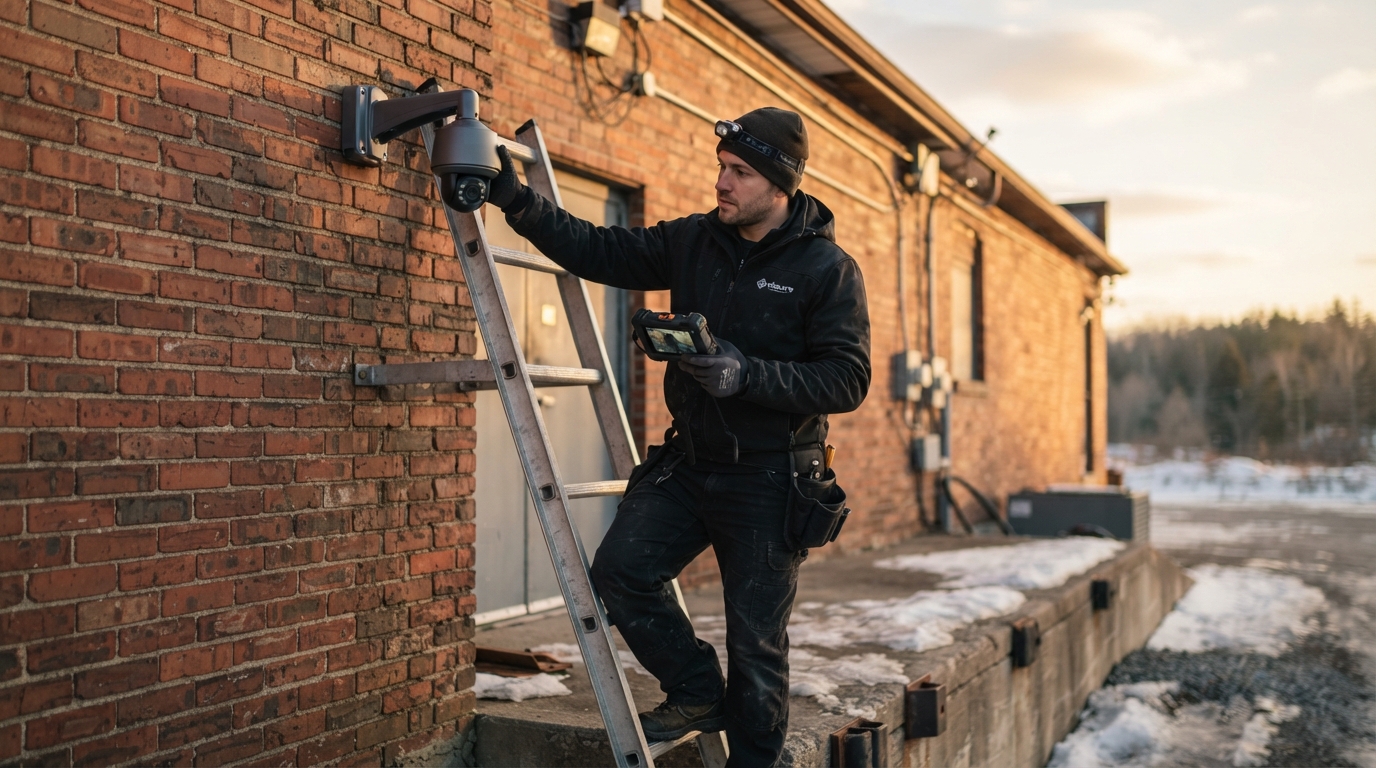
• Commercial security systems combine video surveillance, access control, and monitored alarms to protect a business continuously, not just during business hours.
• Layered coverage (entry points, interior zones, and perimeter) reduces blind spots that a single camera or lock cannot address.
• Monitoring and alerts allow a response to begin before anyone physically arrives on site.
A business left unprotected overnight or during off-hours faces risks from break-ins, vandalism, and internal theft that standard locks cannot prevent. Commercial Security Systems in Buffalo NY address this gap by combining surveillance, access control, and alarm monitoring into a single coordinated setup that operates whether staff are present or not. The goal is continuous visibility rather than periodic checks.
What Makes a Commercial System Different From a Home Setup
Commercial properties typically have more entry points, larger square footage, and higher-value inventory or equipment than a residence, which changes how a system needs to be designed.
• Multiple access points (loading docks, employee entrances, main doors) each need separate control.
• Larger spaces require more cameras and sensors to avoid gaps in coverage.
• Business hours create a need for different permission levels for staff, vendors, and after-hours cleaning crews.
A system scaled for a single-family home rarely accounts for shift changes, multiple tenants, or inventory storage areas, which is why commercial-grade equipment and zoning are treated as a distinct category of installation.
Core Components That Operate Continuously
A functioning commercial setup relies on a handful of components working together rather than any single device.
|
Component |
Primary Function |
Operates When |
|
Video surveillance |
Records and/or streams activity |
24/7, continuous |
|
Access control |
Restricts entry by credential or schedule |
During set hours or always-on |
|
Monitored alarm |
Detects intrusion and signals a response |
Primarily off-hours |
|
Environmental sensors |
Flags smoke, flooding, or temperature shifts |
24/7, continuous |
Each layer covers a different risk. Cameras document what happened, access control limits who can get in, and monitored alarms create a path to a response when the business is closed. According to OSHA guidance on workplace security, physical security measures including monitored access and surveillance are part of a broader approach to reducing workplace incidents.
Buffalo, NY Considerations for Continuous Coverage
Weather and seasonal patterns in Buffalo, NY add practical considerations that other regions may not face year-round.
1. Heavy snow and ice can obscure exterior camera lenses or block sensor lines of sight, so mounting height and placement matter.
2. Power interruptions during winter storms make battery backup for alarm panels and cameras a practical necessity rather than an extra.
3. Extended darkness in winter months increases reliance on infrared or low-light camera capability for usable night footage.
Commercial properties across the region, including retail storefronts, warehouses, and office buildings, generally need systems built to keep functioning through power fluctuations and reduced visibility rather than fair-weather setups alone.
Monitoring and Response: Why the Connection Matters
A camera that only records locally is of limited use if no one reviews the footage until after a loss has already occurred. Monitored systems route alerts to a central station or a designated contact in real time, which shortens the gap between an event occurring and someone becoming aware of it.
• Motion or door sensors trigger an alert the moment a breach is detected.
• Monitoring staff can verify the alert against live or recent video before escalating.
• Verified alerts can be routed to local authorities faster than an unmonitored system allows.
This distinction, monitored versus unmonitored, is often the difference between a system that documents a loss after the fact and one that creates a chance to limit it while it is happening.
Based in Cheektowaga, NY, Armored Alarm extends service coverage to businesses throughout Buffalo, NY.
Frequently Asked Questions
Does a commercial system need to be monitored to be effective? Unmonitored systems still record activity, but a monitored connection adds a real-time alert path during off-hours, which is when most break-ins to unoccupied commercial buildings tend to occur.
How many cameras does a typical small business need? Camera count depends on square footage and the number of entry points; a single retail unit may need far fewer than a warehouse with multiple loading docks and storage zones.
Can access control work during a power outage? Battery backup is standard on most commercial-grade panels and controllers specifically to keep access control and alarm functions active during outages common to winter storms in the Buffalo, NY area.
Is video footage enough without an alarm system? Footage alone documents events after they happen; pairing it with an alarm adds a detection and alert function that can shorten response time during an active incident.