Recap:
• Professional TIG welding delivers cleaner, more precise welds than most other arc processes, making it the preferred choice for high-stakes industries like medical, aerospace, and oil and gas.
• Skilled technicians and ISO-certified quality systems are the key differentiators between a reliable provider and a costly mistake.
Professional tig welding services give manufacturers across the United States a dependable path to precision-critical joints that other welding methods simply cannot match. When part tolerances are tight and material integrity is non-negotiable, the process and the provider both matter.
What Makes TIG Welding Different from Other Processes
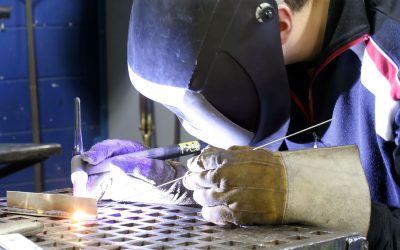
Tungsten Inert Gas welding, formally known as Gas Tungsten Arc Welding (GTAW), stands apart from MIG and stick welding in several measurable ways. It is widely regarded as the most precise arc welding process, using a non-consumable tungsten electrode to create the arc, with optional filler rod addition and an inert shielding gas to protect the weld pool from atmospheric contamination.
The absence of flux and the clean shielding environment mean no slag, minimal spatter, and excellent metallurgical integrity. That combination of cleanliness and control is why so many regulated industries specify GTAW over alternatives.
Another significant advantage is the low heat input of GTAW, which minimizes distortion and warping in the workpiece, making it ideal for thin materials and delicate components. For manufacturers working with stainless steel, aluminum, or titanium, that thermal control directly reduces scrap rates and rework costs.
| Feature | TIG (GTAW) | MIG (GMAW) | Stick (SMAW) |
| Weld cleanliness | Excellent – no slag or spatter | Moderate spatter possible | Slag removal required |
| Heat control | Precise, low heat input | Moderate | Less precise |
| Material range | Wide, including exotic alloys | Common metals | Common metals |
| Best fit | Precision/thin-gauge parts | Production volume | Heavy structural |
Industries That Rely on Professional GTAW
GTAW is highly versatile, capable of welding a wide range of metals including stainless steel, aluminum, titanium, and even dissimilar metals, making it suitable for industries like aerospace, automotive, and medical device manufacturing. The breadth of that list reflects how broadly the process has been adopted across U.S. manufacturing.
Key sectors served by professional TIG welding providers include:
• Medical device manufacturing – surgical instruments, implants, and diagnostic housings require defect-free welds with no contamination risk.
• Mold repair and revision – injection molds and tooling dies demand precise surface build-up that preserves dimensional stability.
• Oil and gas – shaft and coupler repairs depend on controlled heat input to maintain alignment under operational stress.
• Aerospace and defense – thin-gauge exotic alloys require the weld integrity and appearance that GTAW consistently delivers.
• General industrial – precision-machined components across automotive, firearms, and electronics benefit from the process’s repeatability.
According to the American Welding Society’s GTAW process guide, proper shielding gas selection and electrode preparation are foundational to achieving consistent, code-compliant welds in regulated applications. Choosing a certified provider removes that variable from the manufacturer’s plate entirely.
How to Compare TIG Welding Service Providers
Not every shop offering GTAW operates at the same standard. When evaluating providers, these factors separate capable shops from truly specialized ones:
1. Certification – ISO 13485 certification signals a quality management system built for medical-grade traceability and process validation.
2. Microscopic capability – TIG micro welding is performed under magnification using very low amperage to create extremely small welds, often measured in thousandths of an inch. Not all shops have the equipment or trained technicians for this level of work.
3. Material experience – specialty welding applications often include materials such as aluminum, magnesium, titanium, pure molybdenum, nickel, cobalt and tungsten-based alloys, stainless steel, carbon and low alloy steels. A provider’s material range reflects their actual depth of process knowledge.
4. Nationwide reach – for manufacturers shipping parts for repair or production welding, a provider with a proven nationwide service model reduces lead times and logistics complexity.
5. Repair vs. production capability – precision TIG welding for shaft repair, couplers, and detailed industrial components focuses on controlled heat input and accurate surface build-up, helping manufacturers restore parts while maintaining alignment and dimensional stability.
Frequently Asked Questions
What materials can TIG welding join? GTAW can weld a wide range of metals including stainless steel, aluminum, titanium, and dissimilar metals. Exotic alloys like molybdenum, cobalt, and nickel-based materials are also within scope for experienced shops.
When is TIG welding preferred over MIG? TIG is chosen when joint quality and appearance are critical, such as for aerospace components, pharmaceutical and food-grade stainless pipework, nuclear and chemical processing equipment, and precision automotive fabrications.
What is microscopic TIG welding? The process is ideal for delicate assemblies used in medical, aerospace, and precision machining applications because it minimizes distortion and protects fine surface geometry that standard GTAW cannot safely approach.
Does ISO certification matter when choosing a TIG welding provider? Yes. As an ISO 13485 certified company, Micro Weld, Inc. has provided micro laser and TIG welding services to medical device manufacturers for over 25 years. That certification means documented process controls, validated equipment, and traceable quality records on every job.
For manufacturers across the USA who need precision, repeatability, and material expertise in a single provider, working with a specialized shop is the most direct path to consistent results. Micro Weld, Inc serves medical device, mold repair, oil and gas, aerospace, and general industrial clients nationwide with both microscopic and standard TIG welding capabilities backed by ISO 13485 certification.