Briefly:
- A successful air conditioning installation depends on accurate load calculations, correct equipment sizing, and proper ductwork and refrigerant line setup.
- South Florida’s heat and humidity make professional sizing and airflow checks especially important for homes in Fort Lauderdale, FL.
- Skipping steps like permitting or post-install testing can shorten equipment life and raise energy bills.
A successful air conditioning installation requires correct equipment sizing, proper refrigerant and airflow setup, and verified post-installation testing to confirm the system performs as designed. Homeowners who understand these steps can better evaluate quotes and avoid costly sizing or airflow mistakes.
Getting an air conditioning installation right from the start matters more in a climate like Fort Lauderdale, FL, where cooling systems run for much of the year. A unit that is poorly sized or improperly connected can struggle with humidity control even if it reaches the target temperature, leading to a space that feels damp rather than comfortable.
Load Calculation and Equipment Sizing
Before any equipment is selected, a technician should calculate the cooling load for the specific home or space rather than relying on rule-of-thumb estimates. This step accounts for square footage, insulation, window exposure, and local climate conditions.
- Oversized units cool the air quickly but cycle off before removing enough humidity, which can leave rooms feeling clammy.
- Undersized units run continuously and struggle to reach the target temperature during peak heat.
- Proper sizing uses recognized calculation methods rather than square-footage guesses alone.
According to ENERGY STAR guidance from the EPA, bigger is not always better, and an oversized air conditioner costs more to purchase, wastes energy, and does not provide better cooling. This applies to both room units and central systems, where sizing is about matching the space to the equipment, since an oversized unit will cool the room before it removes enough humidity, leading to a damp and clammy feel.
Ductwork, Refrigerant Lines, and Placement
Once sizing is confirmed, attention shifts to the physical components that move air and refrigerant through the system.
- Ductwork inspection or installation – existing ducts are checked for leaks, proper insulation, and correct sizing to match the new unit’s airflow requirements.
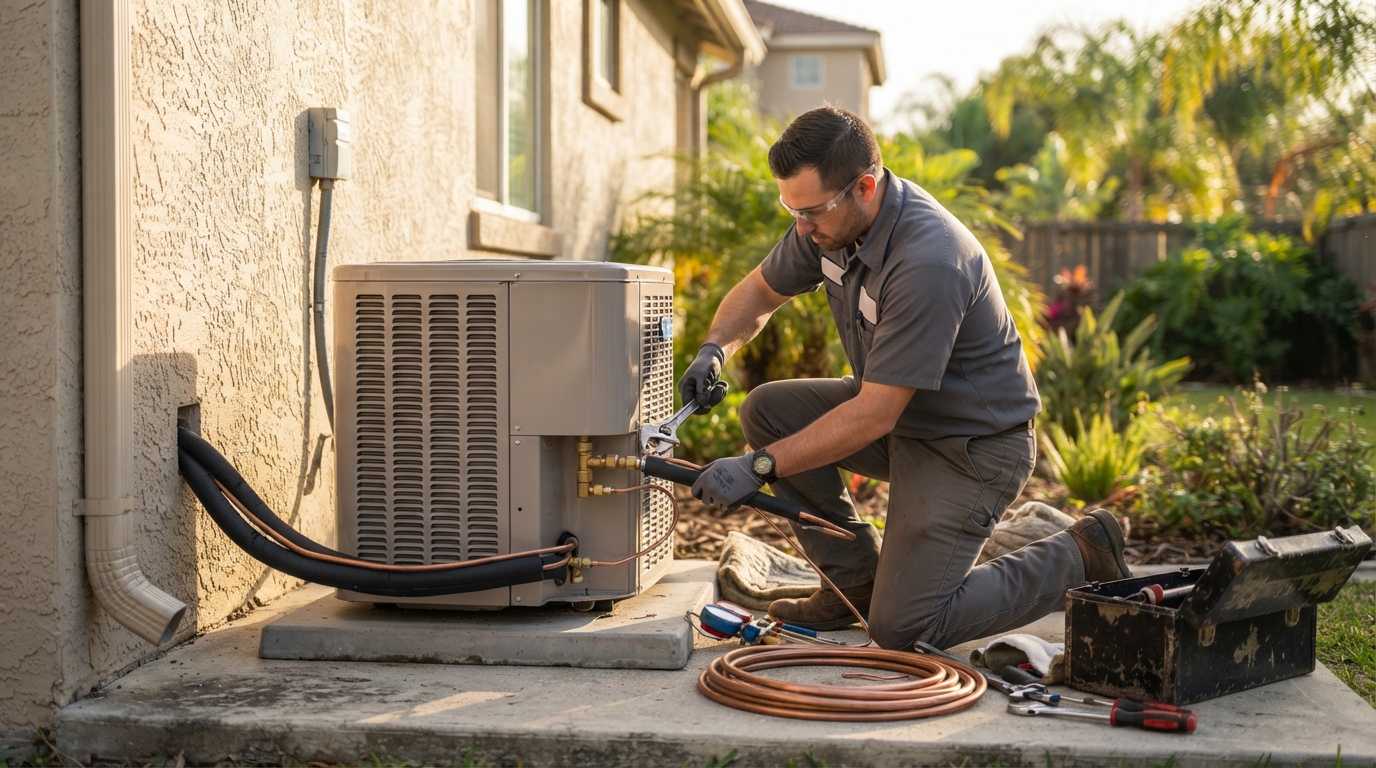
- Refrigerant line setup – lines are measured, charged, and sealed according to manufacturer specifications to prevent performance loss.
- Indoor and outdoor unit placement – units are positioned for adequate clearance, drainage, and airflow, away from heat sources or direct sun exposure where possible.
Manufacturer documentation reinforces that charging and airflow steps are not optional extras. Proper sizing and installation of equipment is critical to achieve optimal performance, and split system air conditioners and heat pumps must be matched with appropriate coil components to meet efficiency criteria.
Permits, Electrical Work, and System Testing
Many jurisdictions in Fort Lauderdale, FL require permits for central air conditioning replacement or new installation, particularly when electrical circuits or ductwork are modified. A licensed installer typically handles permit applications and schedules any required inspections.
| Installation Stage | Primary Purpose | Common Pitfall if Skipped |
| Load calculation | Right-sizes equipment to the space | Oversized or undersized unit |
| Ductwork check | Confirms airflow and seals leaks | Energy loss, uneven cooling |
| Refrigerant charging | Matches manufacturer specs | Reduced efficiency, shorter lifespan |
| Post-install testing | Confirms airflow and temperature split | Hidden faults go unnoticed |
After physical installation, technicians typically verify refrigerant charge, static pressure, and temperature differential between return and supply air. This final check confirms the system matches its rated performance before the job is considered complete.
Frequently Asked Questions
How long does a typical central air conditioning installation take? Most residential installations are completed within a single day, though jobs involving ductwork modifications or electrical upgrades may take longer.
Does humidity in Fort Lauderdale, FL affect installation requirements? Yes. High ambient humidity makes correct sizing and airflow balancing especially important, since an oversized or poorly installed unit can leave indoor air feeling damp even at the target temperature.
Are permits required for air conditioning installation? Permit requirements vary by project scope and local code, so homeowners should confirm requirements for electrical or structural changes before work begins.
What happens during post-installation testing? Technicians typically check refrigerant charge, airflow, and the temperature difference between return and supply air to confirm the system operates within manufacturer specifications.
Planning the Next Step
Based in Pompano Beach, FL, BW Air Conditioning serves customers across Fort Lauderdale, FL.
For those evaluating options locally, readers can Visit Website To Schedule Air Conditioning Installation to review published service details.