The gist:
- Water damage restoration involves inspection, extraction, drying, cleaning, and repair, usually completed in stages over several days to weeks depending on severity.
- Vero Beach, FL properties face elevated flood exposure, so fast water removal and structural drying matter more than in many other regions.
- Acting within the first 24 to 48 hours after a leak or flood significantly reduces the risk of mold growth and structural deterioration.
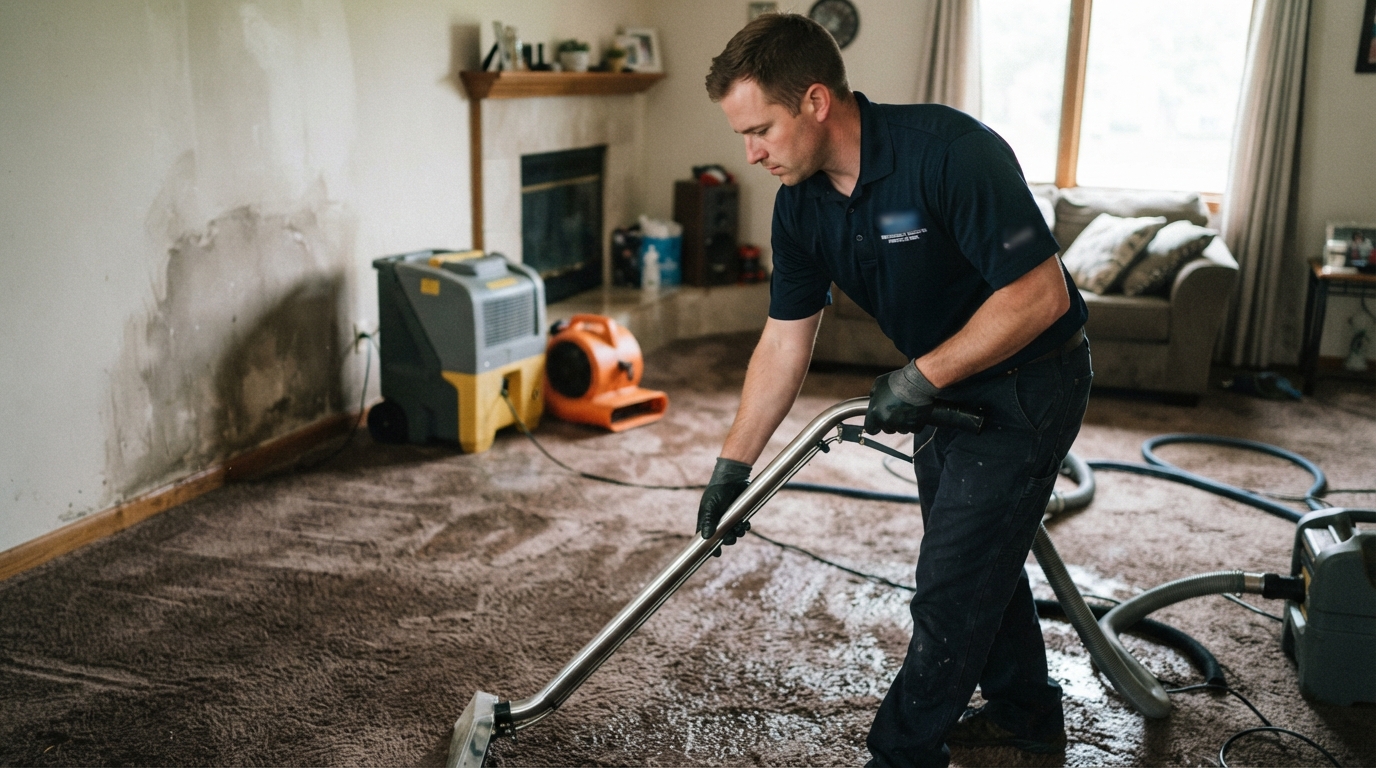
Standing water or a saturated carpet after a storm signals the need for prompt extraction, drying, and moisture testing before repairs can begin. Homeowners searching for residential water damage restoration services are typically trying to understand what the process involves, how long recovery takes, and which steps protect a structure from long-term damage like mold or wood rot.
Water intrusion rarely stays contained to one room. Within hours, moisture can travel into subfloors, wall cavities, and insulation, which is why a structured restoration sequence matters more than a quick surface cleanup.
Why Water Damage Response Time Matters in Vero Beach, FL
Homes in this area face a documented flood exposure that shapes how quickly restoration needs to start. Recent flood risk data shows that the city of Vero Beach has major risk from flooding, with 4,221 properties at risk of flooding over the next 30 years. That figure represents 57.3% of all properties in Vero Beach, a share large enough that most homeowners in the area will encounter some flood exposure during ownership.
Rainfall events have already tested that risk directly. In one recent storm, Vero Beach was soaked by a record 3.83 inches of rain in 24 hours, according to the National Weather Service, and residents described flooding severe enough that “Some areas were really flooded. The water would come over our jeep”. Standing water of that depth can reach interior walls and flooring quickly, which is why delayed response increases both material loss and mold risk.
Homeowners who want to understand their property’s specific exposure can consult FEMA flood maps to review zone designations and historical claims data before storm season.
The Water Damage Restoration Process Step by Step
A typical residential restoration project follows a consistent sequence, regardless of whether the source was a burst pipe, roof leak, or flood intrusion.
- Inspection and moisture mapping — Technicians assess the extent of water intrusion using moisture meters to identify hidden saturation in walls, subfloors, and insulation.
- Water extraction — Standing water is removed using pumps and extraction equipment to stop further absorption into building materials.
- Structural drying — Industrial air movers and dehumidifiers reduce humidity levels in affected rooms over several days.
- Cleaning and sanitizing — Surfaces exposed to contaminated water are cleaned to reduce bacterial and mold risk.
- Monitoring — Moisture levels are checked daily until materials return to a safe baseline.
- Repair and reconstruction — Damaged drywall, flooring, or trim is replaced once the structure is confirmed dry.
Skipping steps, particularly structural drying and monitoring, is the most common reason mold reappears weeks after a cleanup appears finished.
Comparing Water Damage Severity Levels
Not every water event requires the same scope of work. The table below outlines how severity typically affects timeline and approach.
| Damage Category | Typical Source | Estimated Drying Time | Common Next Steps |
| Clean water (minor) | Supply line leak, appliance overflow | 1 to 3 days | Extraction, drying, spot repairs |
| Gray water (moderate) | Washing machine overflow, toilet overflow | 3 to 5 days | Extraction, sanitizing, drying, minor reconstruction |
| Black water (severe) | Flood water, sewage backup | 5 to 10 days or more | Full extraction, demolition of porous materials, sanitizing, reconstruction |
| Storm/flood intrusion | Hurricane, heavy rainfall | Varies by depth and duration | Structural assessment, extraction, extended drying, repair |
Hurricane-driven flooding has already produced significant losses locally; nearby Indian River County recorded storm damage in the billions during a recent major hurricane, underscoring why severe flood intrusion often requires an extended drying and reconstruction timeline rather than a quick fix.
What Homeowners Can Do Before Help Arrives
A few immediate actions reduce damage while waiting for extraction equipment to arrive.
- Shut off the water source if the leak is from a pipe or appliance.
- Move furniture, rugs, and electronics away from standing water when it is safe to do so.
- Open windows or run fans to begin air circulation if weather permits.
- Photograph damage for insurance documentation before cleanup begins.
- Avoid using household vacuums on standing water, since they are not designed for water extraction and can create electrical hazards.
These steps do not replace professional extraction and drying but can limit how far moisture spreads before equipment is in place.
Frequently Asked Questions
How long does residential water damage restoration take? Minor water intrusion can dry within one to three days, while severe flooding or black water contamination often takes a week or longer once extraction, sanitizing, and reconstruction are included.
Is mold always a risk after water damage? Mold growth becomes more likely once materials stay wet beyond 24 to 48 hours, which is why fast extraction and monitored drying are central to the restoration process.
Can homeowners handle water damage cleanup without professional equipment? Small, clean-water spills may be manageable with towels and fans, but moderate to severe water intrusion typically requires commercial-grade extraction and dehumidification equipment to fully dry structural materials.
Does standard homeowners insurance cover flood damage? Flood damage is generally excluded from standard homeowners policies and instead requires separate flood insurance, so reviewing coverage before storm season is worthwhile.
Business Information and Next Steps
Hazard Clean Restoration serves customers across Vero Beach, FL.
Readers can learn more about its offerings and published service details on residential restoration for local water damage recovery. Learn more about residential restoration.