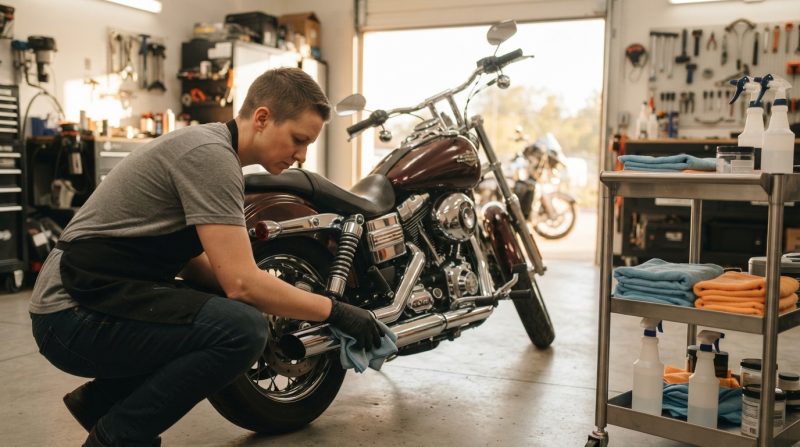
Essentially:
- Motorcycle detailing involves careful cleaning, paint correction, and protective coatings suited to a bike’s smaller, more delicate surfaces than a car.
- Fort Collins, CO riders face seasonal buildup from sun exposure, bug residue, and road film that can dull finishes if left untreated.
- Professional detailing differs from a basic wash by addressing chrome, paint defects, and protective sealants in a single, methodical process.
Riders searching for information on motorcycle care are usually trying to determine what a proper detail actually includes and how it differs from a quick wash at home. A thorough detail addresses paint condition, chrome and metal components, and long-term protection rather than just surface dirt.
Those researching Motorcycle Detailing Fort Collins CO are often comparing basic washes against more involved services that include polishing, decontamination, and sealants. Understanding the difference helps set expectations for cost, time, and results before booking an appointment.
What Motorcycle Detailing Actually Involves
A full motorcycle detail typically moves through several distinct stages rather than a single wash-and-wipe pass. Each step targets a different layer of grime or wear that accumulates on a bike’s exposed surfaces.
- Decontamination: Chemical or mechanical methods, such as iron removers or clay treatments, pull embedded contaminants out of paint and alloy surfaces before any polishing begins.
- Paint correction: If the paint has minor scratches or swirls, a polish is applied by hand or with a buffer to smooth them out, while deeper damage calls for a paint correction compound first.
- Chrome and metal care: Buffing to a haze and wiping clean with a separate dry microfiber towel, then sealing with a chrome protectant or wax, slows the next round of tarnish for several weeks.
- Protective finishing: A coat of wax provides basic shine and protection, or a ceramic coating offers longer-lasting, advanced protection, while a paint sealant extends the life of the finish.
Working in small, controlled sections during correction matters because mistakes made at this stage get locked in place once a sealant or coating is applied. Whatever gets polished into the paint is locked under a coating for years, which is why correction should happen before any protective layer goes on.
Paint Correction Versus Basic Washing
Riders sometimes assume a detail is just an upgraded car wash, but correction work addresses defects a wash cannot touch. A two-stage correction starts with a cutting compound to remove heavier defects, then follows with a finer polish to refine the finish, removing 80 to 95 percent of defects in what most detail shops mean by a full paint correction. More severe cases involving heavy oxidation or deep water spots may call for additional steps, though motorcycles generally need less aggressive correction than a full-size vehicle due to smaller panel sizes.
| Service Level | What It Addresses | Typical Use Case |
|---|---|---|
| Basic wash | Surface dirt, dust, light bug residue | Routine upkeep between rides |
| Decontamination + polish | Embedded grime, light swirls, oxidation | Seasonal refresh or pre-sale prep |
| Full correction + protection | Scratches, chrome tarnish, long-term finish protection | Restoring neglected or show-quality bikes |
For riders in Fort Collins, CO, seasonal conditions add another layer to this decision. Fort Collins roads, harsh sun, bug residue, water spots, road film, and seasonal buildup can slowly dull the finish and reduce protection if a bike sits without attention for several months.
Why Motorcycles Require a Different Approach Than Cars
Smaller surface area does not necessarily mean an easier job. A motorcycle may have less painted surface than a car, but that does not necessarily make it an easier detailing job. Exposed engine components, tight panel gaps, and mixed material types such as chrome, plastic, and painted metal all require different handling within the same session.
Heat-sensitive areas near exhaust headers also need distinct products. Near exhaust headers, a heat-tolerant product should be used, since standard wax burns off in that environment. This kind of detail-specific knowledge is part of why professional guidance from the EPA’s vehicle care and emissions resources is sometimes referenced when discussing solvent-based cleaning products and their proper handling around engine components.
Frequently Asked Questions
How often should a motorcycle be detailed? Frequency depends on riding habits and storage conditions, but seasonal attention, particularly before and after winter storage, helps catch oxidation or tarnish before it sets in.
Is paint correction necessary before every detail? No. Correction is typically reserved for bikes showing visible swirls, scratches, or oxidation rather than routine maintenance washes.
Can ceramic coating be applied over chrome and metal parts? Yes, though ceramic coating for metal is considered the longest-lasting option on show bikes when applied correctly after proper preparation.
What should riders in Fort Collins, CO consider seasonally? Sun exposure and road film buildup are common concerns in this region, making periodic decontamination and protective sealants useful for maintaining finish quality.
A motorcycle detail combines surface cleaning, correction, and protective steps that vary based on a bike’s condition and the rider’s goals, and reviewing these stages beforehand helps set realistic expectations for any appointment. Business hours and appointment details for Moxxi’s Auto Detail are listed for the Fort Collins, CO service area.
Current service area information for Moxxi’s Auto Detail is published for riders reviewing appointment options.