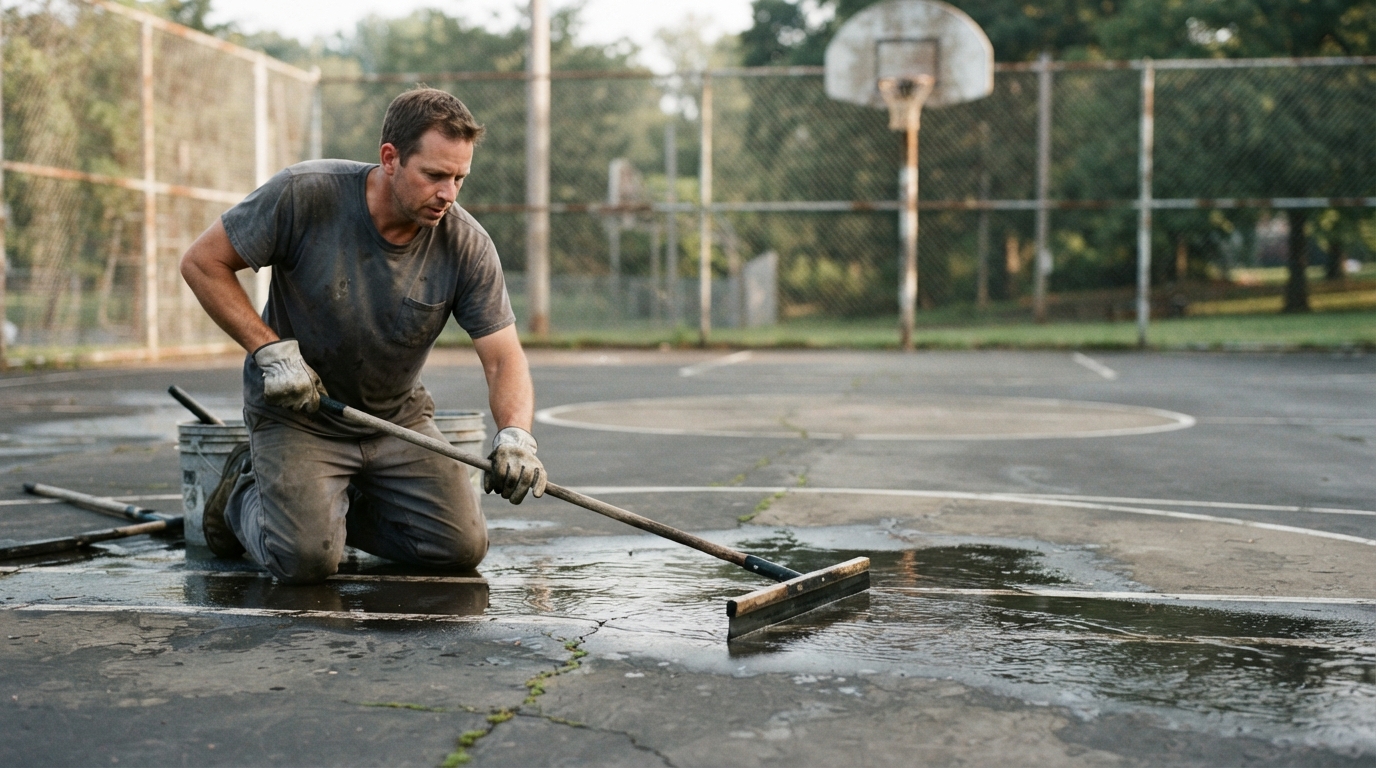
In short:
- Routine cleaning, crack sealing, and resurfacing keep outdoor basketball courts safe and playable through Denver, CO’s freeze-thaw cycles.
- Surface type (asphalt, concrete, or acrylic coating) determines how often a court needs attention and what kind of repairs it will eventually require.
- Addressing drainage issues and small cracks early prevents costly structural damage later.
Outdoor basketball courts need a predictable maintenance routine that includes regular cleaning, prompt crack repair, and periodic resurfacing to stay safe and playable. Skipping these steps allows water, UV exposure, and temperature swings to shorten a court’s usable life well before its structural materials actually fail.
Homeowners and facility managers researching outdoor basketball courts are often trying to decide between building a new court or rehabilitating an existing one. Either path depends heavily on understanding how surface material, climate, and usage patterns interact over time, since a court that looks fine on the surface can still have problems developing underneath.
Why Surface Material Determines Your Maintenance Schedule
The paving material beneath an outdoor basketball court sets the baseline for how much upkeep it will demand.
- Asphalt: Asphalt softens in extreme heat, degrades faster than concrete, and requires periodic resealing and maintenance. Resurfacing an asphalt basketball court every 4 to 5 years, and sealing any cracks early before water works its way underneath, is commonly recommended.
- Concrete: Concrete courts are durable and require less maintenance but are generally more expensive upfront.
- Acrylic coatings: One of the main advantages of acrylic is its low maintenance requirements, with regular sweeping and occasional washing usually sufficient to keep the surface in good condition.
A combination approach is common in practice. Many of the best courts combine a concrete base with a tile or acrylic surface for a mix of durability and playability, since a cheaper initial surface can cost more over its lifetime.
Seasonal Maintenance Tasks for Denver, CO Conditions
Courts in Denver, CO face wide temperature swings, intense UV exposure at altitude, and freeze-thaw cycles that stress pavement joints and surface coatings.
- Spring: Inspect for winter cracking, clear debris from drainage channels, and check for standing water after snowmelt.
- Summer: Pressure wash the surface, reapply line striping if faded, and monitor for heat-related surface softening on asphalt courts.
- Fall: Seal any new cracks before the first hard freeze and clean gutters or drains near the court perimeter.
- Winter: Remove snow promptly using plastic shovels rather than metal blades, which can scratch acrylic coatings.
Outdoor surfaces must shed water and survive temperature swings, and solid surfaces like concrete, asphalt, and acrylic rely on a built-in slope, typically about one percent, to channel water off the court. Without that slope working correctly, melting snow and spring rain can pool and accelerate cracking.
Surface Comparison at a Glance
| Surface Type | Typical Resurfacing Interval | Relative Upfront Cost | Maintenance Demand |
| Asphalt | 4-5 years for the acrylic topcoat, longer for the base | Lower | Moderate to high |
| Concrete | 8-15 years | Higher | Lower |
| Acrylic coating over a slab | 4-8 years | Moderate | Low, mostly cleaning |
HomeGuide reports an acrylic hard court typically needs resurfacing every 4 to 8 years, while concrete resurfacing runs every 8 to 15 years and asphalt every 5 to 15 as needed, plus sealing every 3 to 5 years. These ranges shift depending on usage intensity, drainage quality, and how quickly small cracks get addressed.
Warning Signs That Repairs Cannot Wait
Certain issues should trigger immediate attention rather than waiting for a seasonal inspection:
- Standing water that does not drain within a few hours after rain
- Cracks wider than a quarter inch or that have started to branch
- Faded or peeling paint near the key and three-point lines, which reduces visibility for players
- Soft or spongy spots on asphalt, which can indicate base failure underneath
Severe algal growth on a court surface is also a sign worth addressing with a basketball court designer for support, since it can make the playing surface slippery and accelerate coating breakdown.
Frequently Asked Questions
How often should an outdoor basketball court be resurfaced? Concrete and asphalt surfaces may need resurfacing every 5 to 10 years, while acrylic coatings or rubber surfaces may require more frequent maintenance, typically every 3 to 5 years.
Is asphalt or concrete better for an outdoor court in a cold climate? Concrete lasts longer than asphalt and doesn’t soften in heat, and holds acrylic coating better, though asphalt costs less upfront and is easier to repair. In a climate with freeze-thaw cycles, crack sealing becomes especially important for either material.
What causes an asphalt court to crack prematurely? Thin asphalt under 2.5 inches is a primary cause of premature cracking in basketball courts. Inadequate base preparation and poor drainage compound the problem over time.
Can an old court be resurfaced instead of rebuilt? An old concrete court can typically be resurfaced with an acrylic coat by repairing the damage, cleaning the surface, and then applying the acrylic resurfacer followed by colored acrylic coatings. A full rebuild is usually reserved for courts with base or structural failure.
Maintenance Resources and Local Service Information
Based in USA, Colorado Dream Courts serves customers across Denver, CO.
Current information on court construction and resurfacing work is published for Colorado Dream Courts, covering the local service area.