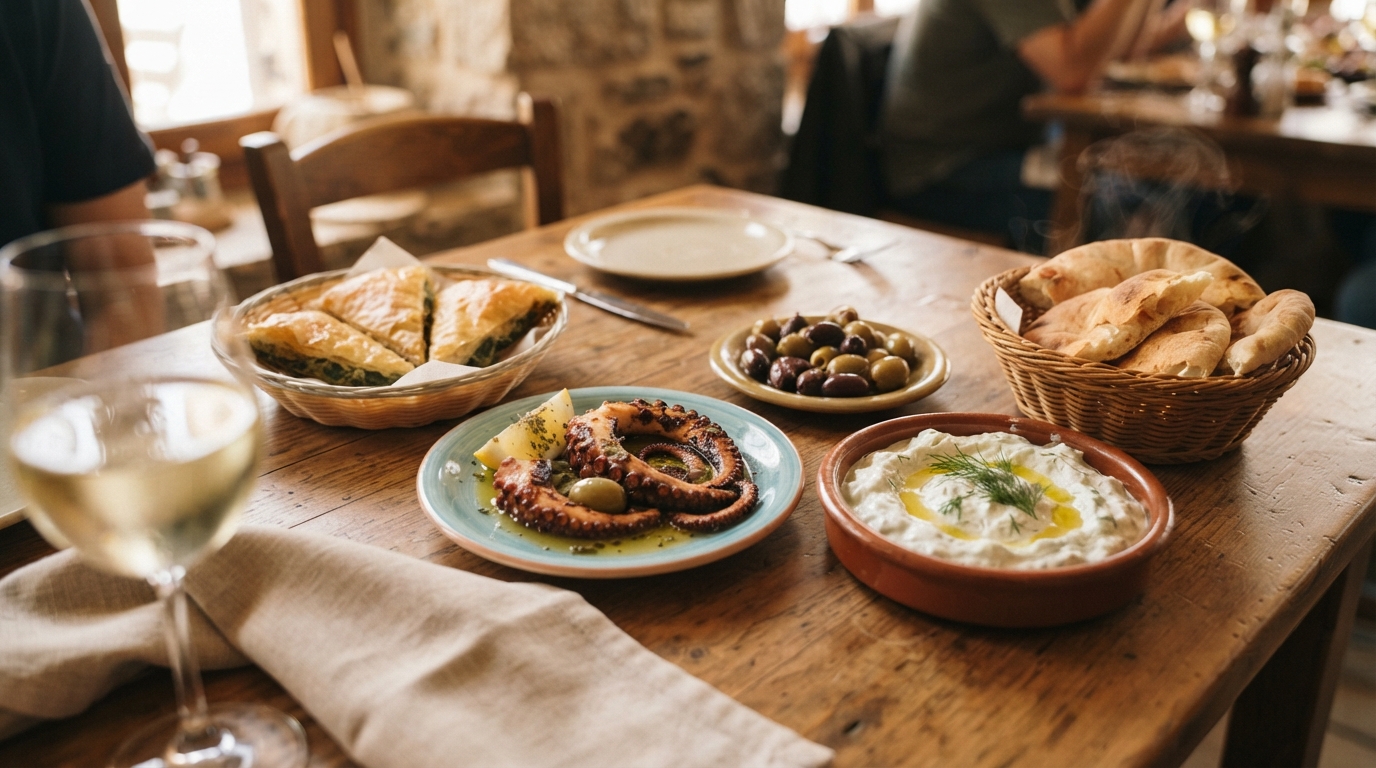
Greek cooking traces back thousands of years to coastal and mountain communities that relied on olive trees, grains, and the surrounding sea for sustenance. The techniques developed then, slow roasting, grilling over open flame, and preserving vegetables in olive oil and vinegar, still define greek food served today. These methods were shaped by necessity and geography long before they became a recognizable culinary identity.
Regional variation played a large role in how the cuisine developed. Island communities leaned on fresh fish and seafood, while mainland and mountain regions favored lamb, goat, and hearty vegetable stews. That split still shows up on modern menus, where seafood dishes sit alongside slow-cooked meat preparations within the same meal.
Core Ingredients That Define the Cuisine
A handful of staple ingredients repeat across nearly every regional variation of Greek cooking. These are not interchangeable with generic Mediterranean pantry items; each has a specific role tied to historical availability and local farming.
- Olive oil: used for cooking, dressing, and preserving, often considered the backbone of the cuisine
- Feta and other sheep’s or goat’s milk cheeses: central to salads, pastries, and baked dishes
- Phyllo dough: thin pastry layers used in savory pies like spanakopita and sweet desserts like baklava
- Fresh herbs: dill, oregano, and mint appear consistently in salads, sauces, and marinades
- Legumes and grains: lentils, chickpeas, and rice pilaf serve as everyday staples rather than side dishes
These ingredients form the base for dishes that have remained largely unchanged in technique, even as presentation has evolved. According to the USDA’s National Agricultural Library, Mediterranean dietary patterns built around olive oil, vegetables, and lean proteins are frequently referenced in nutrition research for their ingredient-driven structure.
Signature Dishes and Cooking Methods
Certain dishes appear on nearly every traditional Greek menu because they represent distinct regional cooking techniques rather than simple variations of one another.
|
Dish |
Primary Method |
Typical Ingredients |
|
Spanakopita |
Baked |
Phyllo, spinach, feta |
|
Souvlaki |
Grilled |
Marinated meat, pita, tzatziki |
|
Moussaka |
Layered and baked |
Eggplant, ground meat, bechamel |
|
Grilled octopus |
Charcoal grilled |
Octopus, olive oil, lemon |
Grilling over charcoal remains one of the most distinct markers of the cuisine, particularly for seafood and skewered meats. Baking techniques using phyllo, by contrast, reflect an older tradition tied to preserving dairy and greens through layered pastry construction.
How Modern Astoria Restaurants Serve Traditional Dishes
Astoria, NY has long been recognized as one of the largest Greek communities in New York City, which has shaped the density and variety of Greek dining options in the neighborhood. Menus in the area commonly include mezze spreads, grilled seafood, and phyllo-based appetizers alongside classic entrees like lamb chops and grilled branzino.
Based in USA, Nisi Estiatorio serves customers across Astoria, NY, offering dishes such as grilled octopus, spanakopita, and saganaki that reflect traditional Greek preparation methods. Menu details, including mezze, seafood, and seasonal specials, are documented on Nisi Estiatorio’s Google Business Profile.
Frequently Asked Questions
What makes Greek cuisine different from other Mediterranean cooking styles? Greek cooking relies heavily on specific ingredients like feta, phyllo, and oregano, combined with grilling and baking methods tied to regional history rather than one uniform Mediterranean style.
Is Greek food typically healthy? Many traditional dishes emphasize vegetables, legumes, olive oil, and lean proteins, which align with dietary patterns often studied for their nutritional structure.
What are common starter dishes at a Greek restaurant? Mezze spreads such as tzatziki, melitzanosalata, and spanakopita are common starters, often served to share before main courses.
Are vegetarian options common in Greek cuisine? Yes, dishes built around legumes, grilled vegetables, and cheese-based pastries are long-standing parts of the cuisine, not recent additions.
Menu listings and current hours for Nisi Estiatorio are published online for reference by those researching dining options in the area.