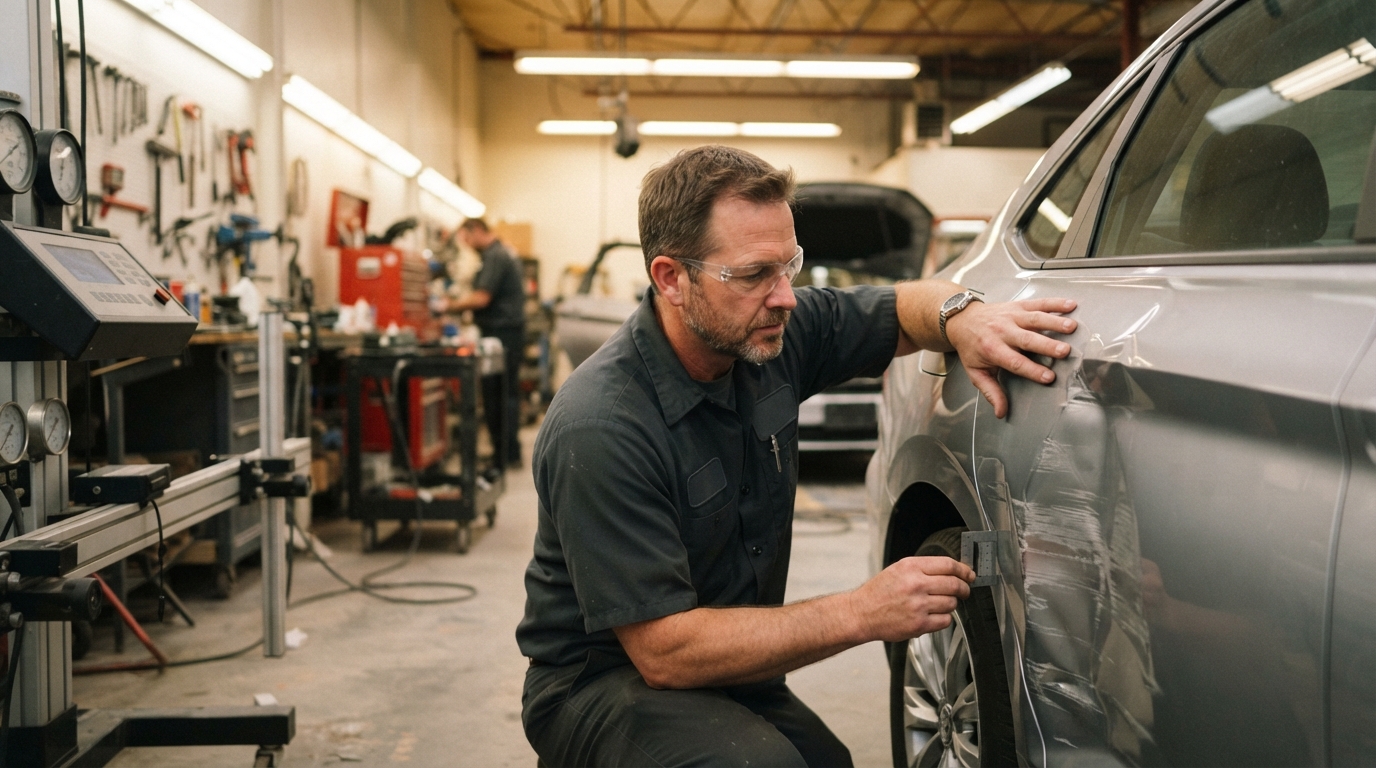
A vehicle entering the collision repair process typically moves through six stages: damage assessment, insurance review, disassembly, structural or body repair, refinishing, and a final quality check before delivery. Understanding this sequence helps vehicle owners set realistic expectations for both timeline and cost.
The first step is usually a written or photo-based estimate, which an inspector uses to identify visible and hidden damage before work begins. Shops offering Collision Repair generally document this stage closely, since insurers and repair facilities rely on an accurate initial scope to avoid delays once parts are ordered and disassembly starts.
The Estimate and Insurance Coordination Stage
Before any physical repair begins, a technician inspects the vehicle for structural, mechanical, and cosmetic damage.
• A written estimate outlines labor, parts, and expected repair time.
• Many shops submit photo estimates for faster review, allowing remote assessment before an in-person visit.
• Insurance adjusters review the estimate, and the shop may communicate directly with the carrier to confirm coverage and authorize repairs.
Drivers are not required to use the repair facility their insurer suggests. Industry guidance confirms that policyholders retain the right to select their preferred shop regardless of any insurer referral.
Disassembly, Structural Repair, and Parts Sourcing
Once the estimate is approved, the vehicle is disassembled so technicians can confirm the full extent of damage, including issues not visible during the initial inspection.
1. Panels, bumpers, and damaged components are removed to expose the frame and underlying structure.
2. Structural repairs are completed using frame-measuring equipment to restore factory specifications.
3. Mechanical systems, including suspension and electrical components, are repaired or replaced as needed.
Shops that hold I-CAR Gold Class status follow role-specific, manufacturer-approved repair procedures rather than generic shortcuts. According to I-CAR, Gold Class is a premier industry recognition awarded to body shops that invest in continuous collision repair training on the latest procedures and technologies, helping professionals stay current with evolving vehicle systems and OEM standards. This distinction matters because the I-CAR Gold Class designation is the most widely referenced shop-level credential in the United States, held by roughly 10 percent of collision repair facilities nationally, according to I-CAR’s Gold Class program page.
Refinishing, ADAS Calibration, and Reassembly
After structural and mechanical work is complete, the vehicle moves into the paint and finishing stage.
|
Stage |
Primary Focus |
Typical Checkpoint |
|
Body smoothing and sanding |
Surface preparation |
Visual inspection for panel alignment |
|
Paint and clear coat |
Color matching and application |
Quality inspection after curing |
|
Reassembly |
Trim, lights, and interior components |
Functional test of electronics and sensors |
|
Final inspection |
Full vehicle review |
Road test before delivery |
Modern vehicles often require Advanced Driver Assistance Systems (ADAS) recalibration after collision repair, since sensors and cameras can shift even slightly during structural work. Many certified facilities now treat pre- and post-repair scanning as a standard documentation step rather than an optional add-on, which helps confirm safety systems function correctly before the car is returned.
For drivers across Brooklyn, NY, this stage is particularly relevant given the density of traffic incidents and the growing number of vehicles equipped with cameras and radar-based safety features. Based in USA, Metro Auto Body serves vehicle owners across Brooklyn, NY who need documented, OEM-guided repair work rather than informal bodywork.
Final Inspection and Vehicle Delivery
Before a vehicle is returned to its owner, most shops perform a multi-point quality check covering paint consistency, panel gaps, and mechanical function.
• A road test confirms handling, braking, and alignment feel correct.
• Electrical and safety systems are verified, including any recalibrated sensors.
• The vehicle is cleaned before delivery, and the owner receives documentation of repairs performed.
Metro Auto Body is a family-owned facility that has operated since 1957 and holds I-CAR Gold Class certification along with manufacturer-specific credentials for several vehicle brands.
Frequently Asked Questions
How long does the collision repair process typically take? Timelines vary based on the extent of structural damage, parts availability, and whether ADAS recalibration is required, so shops generally provide a written estimate before confirming a delivery date.
Do I have to use the repair shop my insurance company recommends? No. Vehicle owners have the right to choose their preferred repair facility even if an insurer suggests a different shop.
Why does ADAS calibration matter after a collision? Sensors and cameras tied to safety features can be affected by structural repairs, so recalibration helps confirm those systems operate as intended before the vehicle is driven again.
What does I-CAR Gold Class certification indicate about a shop? It indicates that technicians have completed role-specific, ongoing training aligned with current OEM repair procedures, a distinction held by a minority of shops nationally.
Current scheduling and estimate information for Metro Auto Body is available for vehicle owners planning a repair appointment.