At glance:
• Look for verified class variety (ballet, tap, jazz, hip hop, and more), trained instructors, and age-appropriate programs before enrolling.
• Studio floors, class sizes, and schedule flexibility affect safety and progress as much as the style of dance taught.
• Families in Piscataway, NJ have several nearby options, so comparing facilities and philosophy matters more than proximity alone.
Choosing a dance studio comes down to matching a student’s goals and age with a facility that offers proper instruction, safe flooring, and a class structure that fits a family’s schedule. The right fit depends less on marketing claims and more on verifiable details: who teaches, what styles are offered, and how classes are organized by age and skill level.
Parents and adult students researching options typically want to know what separates a well-run studio from one that only looks the part on a website. The sections below outline the practical factors worth checking before committing to lessons.
Class Variety and Age-Appropriate Programming
A studio’s class list reveals a lot about its depth and experience. Programs that serve multiple age groups and skill levels, from preschool movement to adult classes, usually indicate a longer operating history and more structured curriculum.
Common dance styles offered by established studios include:
• Ballet and pointe
• Tap and jazz
• Hip hop and modern/moderne dance
• Musical theatre
• Combination classes (such as ballet/tap or ballet/jazz) for younger students
• Preschool creative movement
• Coed classes
Some studios also pair dance instruction with related disciplines such as private piano or vocal training, which can matter for students interested in musical theatre or broader performing arts training.
Instructor Experience and Studio Facilities
Instructor background affects both safety and skill development, particularly for styles like pointe that require physical readiness. Ask whether teachers have formal dance training, how long they have taught, and whether classes are grouped by age and ability rather than mixed without evaluation.
Facility details also matter for injury prevention and long-term comfort:
• Sprung or cushioned hardwood floors reduce joint strain during jumps and turns
• Climate-controlled rooms keep muscles warm and reduce injury risk
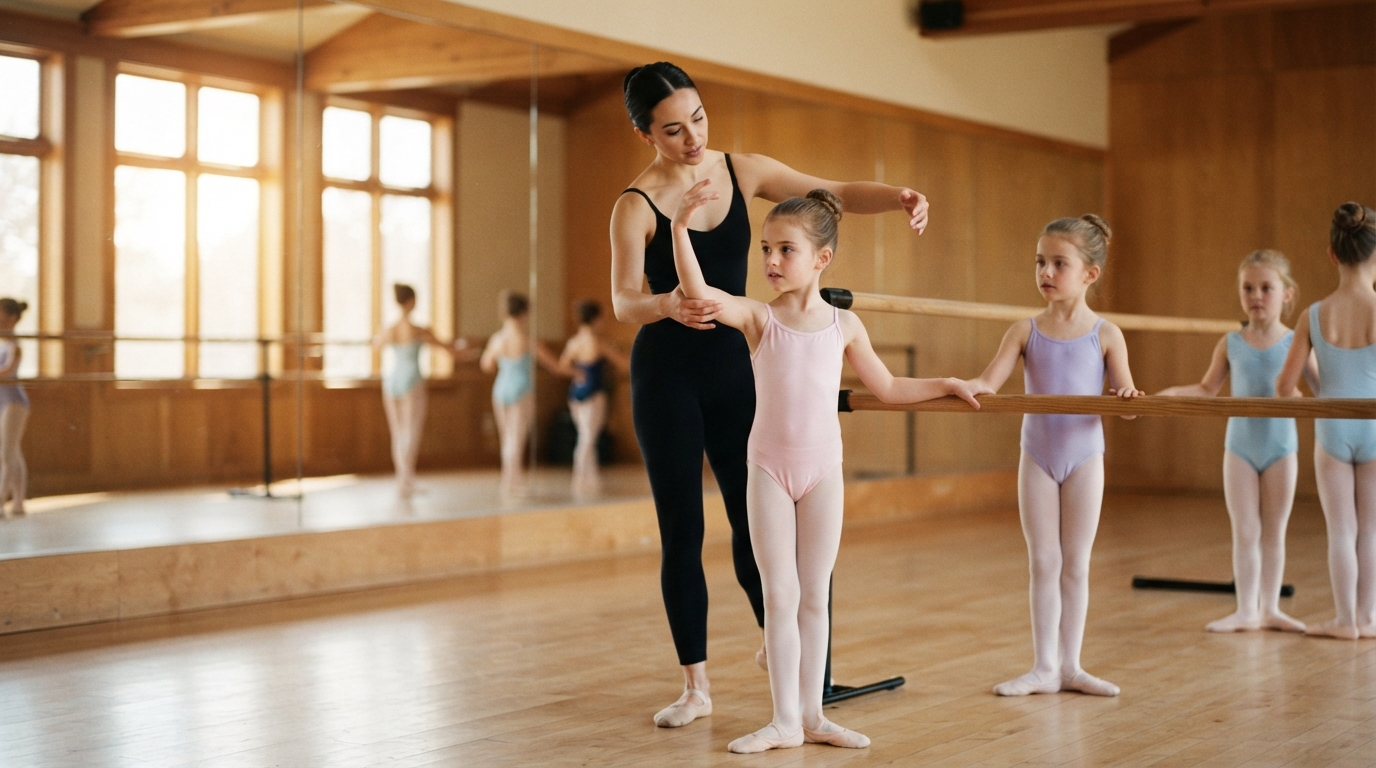
• Mirrors and barres support proper technique correction
• Separate studio spaces allow multiple class levels to run without overcrowding
Dance education research from the National Dance Education Organization outlines how structured movement instruction supports motor skill development and social-emotional growth in young students, which is one reason facility quality and instructor training carry weight beyond aesthetics.
Comparing Studio Models
Not every studio operates the same way. The table below outlines common differences families in Piscataway, NJ may encounter while comparing options.
| Factor | Technique-Focused Studio | Competition-Focused Studio |
| Primary goal | Skill mastery and artistry | Competition placements |
| Class pacing | Progresses by evaluated skill level | Often tied to competition schedule |
| Typical commitment | Flexible, year-round enrollment | Heavier rehearsal and travel schedule |
| Student evaluation | Placed by age/ability testing | Often placed by team tryouts |
Neither model is inherently better, but the distinction affects cost, time commitment, and the overall experience a student can expect throughout the year.
Schedule, Location, and Enrollment Logistics
Weekly schedules, registration timing, and travel distance influence whether a studio is realistically sustainable for a family. Many studios run classes on a traditional school-year calendar with Monday through Friday evening sessions and Saturday morning or early afternoon options, which helps families in Piscataway, NJ plan around school and other commitments. Registration is often seasonal, so checking enrollment windows in advance avoids missing a preferred class time or level.
Travel time from Piscataway, NJ to a studio operating from South Plainfield, NJ is generally short enough that many families treat proximity as a secondary factor compared to class quality and instructor fit.
Frequently Asked Questions
What age should a child start dance classes? Many studios offer preschool creative movement classes starting around age three, with more structured technique classes introduced as children get older and develop motor coordination.
Is pointe training safe for every ballet student? Pointe work typically requires a student to reach a certain age, strength level, and number of years of prior ballet training, which is why reputable studios evaluate readiness before placing students in pointe classes.
Can adults start dance lessons with no prior experience? Yes. Many studios offer adult classes across multiple styles designed for beginners, allowing adults to start dance training for fitness, fun, or personal interest regardless of prior background.
What should I ask before enrolling in a class? Useful questions include instructor qualifications, class size, how students are grouped by skill level, and what the studio’s policy is on performances or recitals.
Business Information and Next Steps
Based in South Plainfield, NJ, Jo-Ann’s Dance Studio-The Performing Arts Centre serves customers across Piscataway, NJ.
Current class schedules and enrollment information for Click Here To Visit Jo-Ann’s Dance Studio-The Performing Arts Centre are published for review before registration.