At glance:
- Overfeeding, skipped water changes, and ignoring filter upkeep are the most common causes of poor aquarium water quality.
- Weekly water testing and partial water changes of roughly 20-30% help keep ammonia and nitrite near zero.
- Professional aquarium maintenance can catch equipment and water chemistry issues before they affect fish health.
Most aquarium problems trace back to inconsistent water changes, overfeeding, or neglected filtration rather than fish disease. Correcting these habits early prevents the majority of tank crashes and livestock losses.
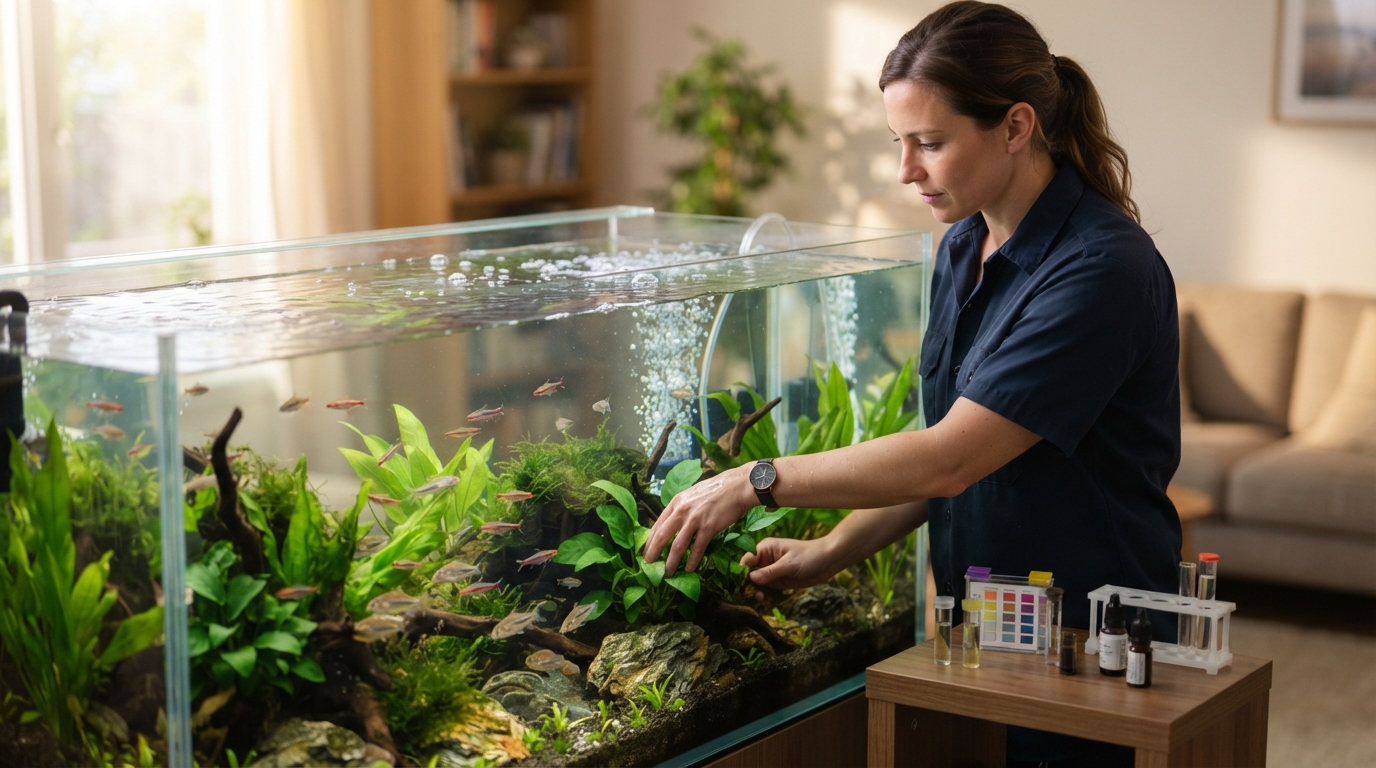
Aquarium maintenance routines that skip regular testing or rely on guesswork tend to let ammonia and nitrite creep upward before an owner notices stressed or gasping fish. A consistent schedule built around water testing, partial water changes, and filter care addresses most of the problems that cause tanks to decline between cleanings.
Overfeeding and Inconsistent Water Testing
Excess food breaks down into ammonia, which is toxic even in small concentrations. A common fix when levels spike is a partial water change, and aquarium owners should do a partial water change of 25-50% right away, using conditioned water at the same temperature, and use a conditioner that detoxifies ammonia to protect fish while bacteria catch up.
- Feed only what fish consume within two to three minutes.
- Test ammonia, nitrite, and nitrate weekly rather than only when fish appear stressed.
- Keep a simple log of results to spot trends before they become emergencies.
Routine testing matters because weekly testing of ammonia, nitrite, nitrate, and pH should accompany the partial water change, light gravel vacuum, and glass cleaning.
Skipping or Mistiming Water Changes
Irregular water changes allow nitrate and organic waste to accumulate, stressing fish even when ammonia stays low. For routine upkeep, weekly water parameter testing for pH, ammonia, nitrite, and nitrate is essential for monitoring the nitrogen cycle, since zero ammonia and nitrite indicate a healthy biological filter while nitrate accumulation requires partial water changes of 10-25 percent.
A frequent mistake is treating every water change the same way, regardless of what the test results show.
| Situation | Recommended Water Change | Frequency |
| Routine weekly maintenance | 20-30% | Weekly |
| Nitrate creeping above target | 25-30% | Weekly or twice weekly |
| Ammonia or nitrite detected | 25-50% | Immediate, then retest |
| New tank cycling | Smaller, frequent changes | Daily to every few days |
Replacement water should always be dechlorinated and matched to tank temperature before it goes in, since it’s important to always match temperature and dechlorinate the new water before it goes in.
Neglecting Filter Maintenance and Equipment Checks
Filters remove physical debris and host the bacteria that process ammonia and nitrite. Rinsing media too aggressively or too often can wipe out that bacterial colony, so monthly checks typically call for rinsing filter sponges in tank water, cleaning the impeller and intake, deep-vacuuming corners and under decor, and testing GH and KH.
Owners in Plano, TX often deal with hard municipal water, which can affect carbonate hardness and buffering capacity over time, making periodic GH and KH checks a useful addition to a monthly routine rather than an afterthought. The EPA’s drinking water guidance outlines general water quality standards that can help owners understand what municipal water may contain before it enters a tank.
Based in Dallas, TX, Dallas Aquarium Kings extends aquarium maintenance and related aquatic care to customers throughout Plano, TX.
Frequently Asked Questions
How often should aquarium water be tested? Established tanks generally need weekly checks of ammonia, nitrite, nitrate, and pH, with more frequent testing during the first several weeks after setup or whenever fish show signs of stress.
Is a bigger water change always better when ammonia spikes? Not necessarily. A controlled 25-50% change with temperature-matched, conditioned water is usually recommended, since extremely large or repeated changes without testing can stress fish further.
How often should filter media be cleaned? Monthly rinsing in removed tank water, rather than tap water, helps preserve the beneficial bacteria colony while still clearing debris from sponges and intakes.
Can hard tap water in Plano, TX affect aquarium chemistry? Mineral content in municipal water can influence general hardness and carbonate hardness, which is why periodic GH and KH testing is a reasonable addition to routine maintenance.
Scheduling and Service Information
Current aquarium maintenance scheduling details for the Plano, TX service area are published through Dallas Aquarium Kings.
Consistent testing, measured water changes, and careful filter care remain the most reliable ways to prevent the water quality problems that affect home and office aquariums.