Essentially:
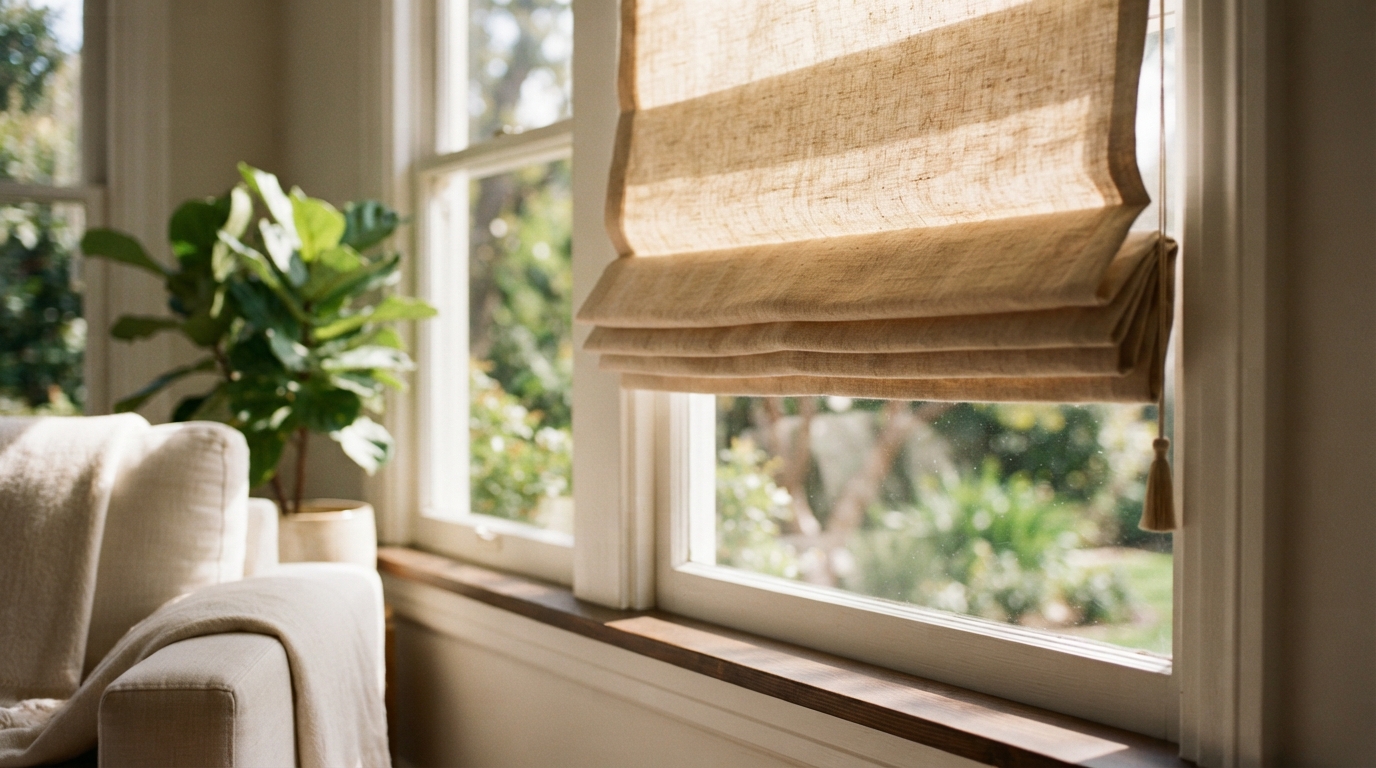
- Roman shades are fabric window coverings that fold into horizontal pleats when raised, offering a tailored look distinct from blinds or curtains.
- Common styles include flat, hobbled, balloon, and relaxed folds, each suited to different room functions and light control needs.
- Professional measuring and installation help prevent fit issues that are common with DIY window treatment projects.
Roman shades are soft fabric window coverings that stack into neat horizontal folds when lifted, combining the clean lines of a blind with the warmth of drapery. They work by pulling a cord or using a cordless lift system to gather the fabric panel upward into even pleats. For homeowners comparing window treatment options, understanding how Roman shades in Lakeland, FL differ from blinds and curtains helps narrow down the right fit for a given room.
Unlike horizontal or vertical blinds made from slats, roman shades use a single continuous piece of fabric. This construction gives them a more polished, upholstered appearance that many homeowners prefer in living rooms, dining areas, and bedrooms. Because the fabric lies flat against the window when lowered, the shades also tend to take up less visual space than layered curtain panels.
How Roman Shades Work and Where They Fit Best
The mechanism behind roman shades is straightforward. Cords or a cordless lift system run through rings sewn into the back of the fabric, and pulling the mechanism draws the panel upward into horizontal folds.
Rooms where roman shades tend to perform well include:
- Living rooms and dining spaces, where a tailored fabric look complements furniture and decor
- Bedrooms, especially when paired with blackout or room-darkening liners
- Home offices, where moderate light control reduces glare on screens
- Kitchens, in moisture-resistant fabrics suited to occasional humidity
In Lakeland, FL, where intense sun exposure and humidity are part of the climate, fabric choice matters as much as style. Heavier or specially treated fabrics resist fading and moisture damage better than lightweight materials, which is a practical consideration for homes that face direct afternoon light for much of the year.
Common Roman Shade Styles
Roman shades are not a single uniform product. Several fold styles exist, and each creates a different look and function.
| Style | Fold Appearance | Best Use |
| Flat | Smooth, tailored panel with minimal fold detail | Modern or minimalist rooms |
| Hobbled | Soft rolled folds that stay visible even when lowered | Formal living and dining rooms |
| Balloon | Billowy, rounded folds at the bottom edge | Traditional or romantic decor |
| Relaxed | Flat with a slight curve at the bottom hem | Casual, transitional spaces |
Fabric weight and lining also affect performance. Blackout linings block most outside light, while light-filtering fabrics allow diffused sunlight while maintaining privacy. According to the U.S. Department of Energy, window coverings including cellular and insulated shades can reduce heat gain and loss, which is relevant for homeowners weighing energy performance alongside style.
Installation Considerations
Fit is the most common issue with window treatments installed without professional measurement. A shade that is even slightly undersized will leave light gaps along the edges, while an oversized shade may bind in the window frame.
Key factors that affect proper installation include:
- Inside-mount versus outside-mount placement, which changes how measurements are taken
- Window frame depth, which determines whether an inside mount is even possible
- Cord safety, particularly in homes with young children or pets
- Headrail type, since some mounting brackets require specific wall or frame material
Cordless and motorized lift options have become more common for households prioritizing child and pet safety, since they eliminate exposed cords. Homeowners in Lakeland, FL evaluating these upgrades often weigh the added convenience against installation complexity, since motorized systems typically require access to a power source or battery compartment near the window.
Frequently Asked Questions
Are roman shades hard to clean? Most fabric roman shades can be spot-cleaned or vacuumed with a brush attachment. Heavily soiled shades may need professional cleaning, since machine washing can distort the pleats and shrink the fabric.
Do roman shades block light completely? Only shades with a blackout lining block most light. Standard light-filtering fabrics allow some sunlight through, which suits rooms where full darkness is not required.
How long do roman shades typically last? Lifespan depends on fabric quality, sun exposure, and daily use, but well-maintained shades in moderate light conditions commonly last several years before fading or mechanical wear becomes noticeable.
Can roman shades be motorized? Yes, many roman shade systems can be fitted with motorized lifts, which are often chosen for hard-to-reach windows or households wanting to remove cords entirely.
Finding Installation Support
Based in USA, Budget Blinds of Lakeland serves customers across Lakeland, FL.
Current product and service area information for window treatments is available, and Click here for Roman Shades is published for homeowners researching local options.