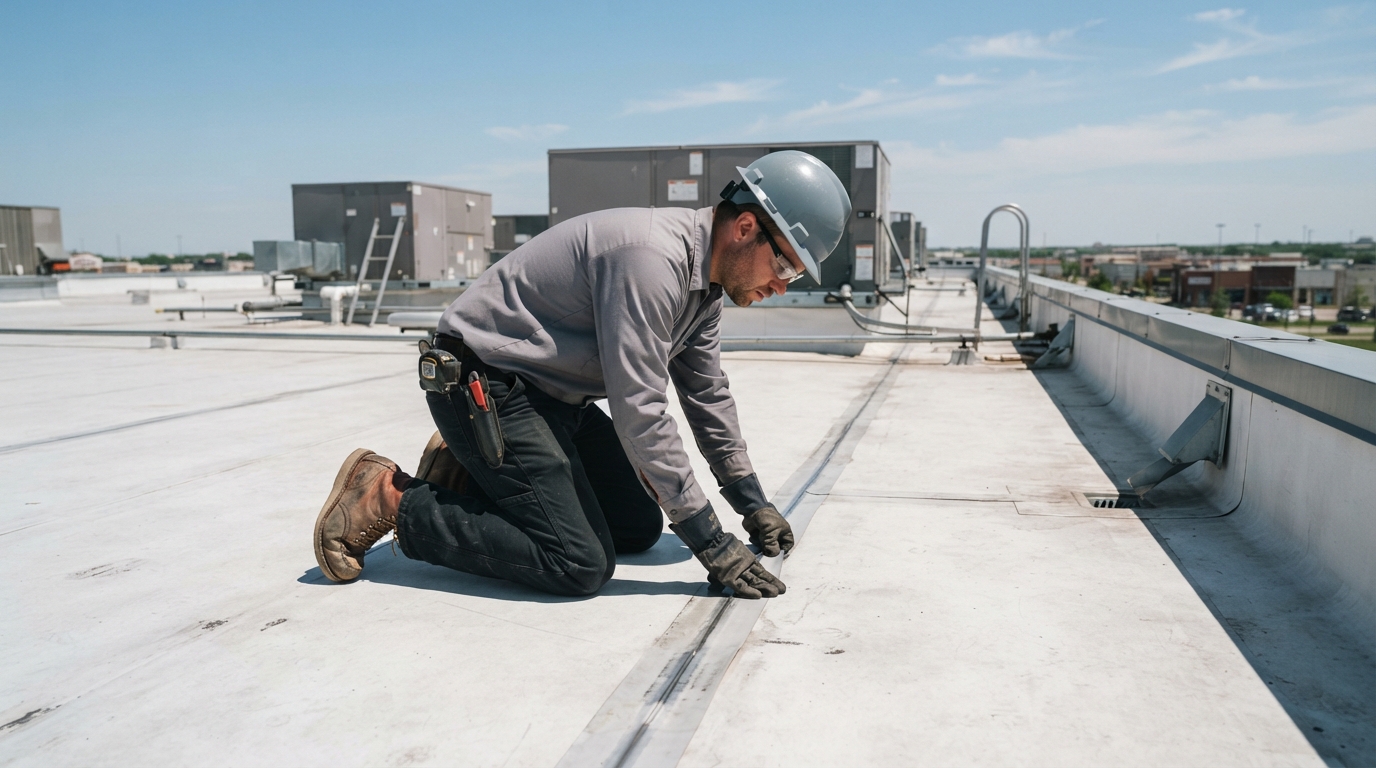
Essentially:
• A commercial roofing contractor extends a building’s service life through regular inspections, timely repairs, and proper material selection.
• Preventive maintenance catches minor issues like ponding water or flashing gaps before they cause structural damage.
• Routine upkeep in coastal climates such as Clearwater, FL helps commercial roofs withstand heat, humidity, and storm exposure.
A commercial roofing contractor protects a building’s structural integrity by identifying wear patterns early and applying repairs before small problems turn into costly replacements. Routine inspection and maintenance work directly affects how long a roofing system performs under sun, rain, and wind exposure.
Property owners searching for a Commercial Roofing Contractor are usually trying to solve a specific problem: a leak, an aging membrane, or a roof nearing the end of its expected lifespan. Longevity depends less on the original installation alone and more on what happens after the roof goes into service. Consistent inspection schedules, documented repairs, and materials matched to the local climate all contribute to how many years a commercial roof remains functional.
Why Roof Longevity Depends on Ongoing Maintenance
A roofing system does not fail all at once. Deterioration typically begins with small, isolated issues that spread if left unaddressed.
• Ponding water that sits longer than 48 hours can accelerate membrane breakdown.
• Cracked or lifted flashing allows moisture infiltration at seams and penetrations.
• UV exposure gradually degrades roofing membranes, reducing flexibility and seam strength.
• Clogged drains and scuppers redirect water toward vulnerable areas of the roof deck.
Addressing these conditions during scheduled visits is generally less disruptive and less costly than responding after water has reached the interior of a building. Commercial roofs in coastal Florida also face added stress from humidity and storm activity, which is why consistent monitoring is a practical part of asset management rather than an optional add-on.
Core Services That Support a Longer Roof Lifespan
Services typically associated with commercial roofing upkeep fall into a few practical categories:
1. Inspections – periodic assessments that document membrane condition, drainage performance, and flashing integrity.
2. Repairs – targeted fixes for leaks, punctures, seam separation, or damaged flashing.
3. Maintenance programs – scheduled servicing designed to catch deterioration before it becomes a structural issue.
4. Replacement planning – evaluating when a roofing system has reached the point where repair is no longer cost-effective compared to replacement.
Each of these functions supports the others. A single inspection without follow-up repair work has limited value, while repairs performed without routine inspection may miss early warning signs in other sections of the roof.
Climate Factors That Affect Roofs in Clearwater, FL
Commercial properties in Clearwater, FL are exposed to conditions that accelerate roof aging compared to drier, cooler regions. High humidity, intense UV radiation, and seasonal storm activity all place additional stress on roofing membranes and seams. The National Weather Service tracks regional storm patterns that property owners can reference when planning seasonal roof assessments ahead of severe weather. Because of this exposure, inspection intervals for buildings in this region are often shorter than those recommended in milder climates, particularly before and after hurricane season.
| Maintenance Approach | Typical Frequency | Primary Benefit |
| Reactive repair only | As issues arise | Addresses visible damage after it occurs |
| Scheduled inspection | Semi-annual or quarterly | Identifies early wear before failure |
| Storm-season assessment | Before and after hurricane season | Confirms readiness and documents storm damage |
Frequently Asked Questions
How often should a commercial roof be inspected? Many commercial roofs benefit from inspections at least twice a year, with additional checks following severe weather events.
What signs indicate a commercial roof needs repair? Ponding water, visible membrane cracking, rusted flashing, and interior water stains are common indicators that repair work is needed.
Does climate affect how long a commercial roof lasts? Yes. Heat, humidity, and storm exposure common to coastal Florida can shorten the expected lifespan of roofing materials compared to drier climates.
Is roof replacement always necessary after storm damage? Not always. A documented inspection often determines whether targeted repair is sufficient or whether the extent of damage warrants full replacement.
Local Roofing Support and Next Steps
Based in Oldsmar, FL, Acoma Roofing serves customers across Clearwater, FL.
Learn More for property owners evaluating roof maintenance timelines.