Summary first:
• Drainage system installation redirects excess water away from a home’s foundation, yard, and hardscape to prevent pooling, erosion, and basement moisture.
• Common solutions include French drains, channel drains, dry wells, sump pump connections, and downspout extensions, matched to a property’s grading and soil conditions.
• Local New Jersey rainfall patterns and clay-heavy soils make professional evaluation useful before choosing a drainage method in Warren, NJ.
Standing water in a yard, a damp basement wall, or soil that stays soggy for days after rain are the clearest signs that a property needs better water management. Drainage system installation addresses these problems by creating a controlled path for water to move away from structures, walkways, and planting beds instead of collecting in low spots.
Properties across central New Jersey deal with a mix of clay soil, mature tree root systems, and seasonal storm patterns that can overwhelm a yard’s natural slope. Flat lots or those with heavy clay content drain slowly, which means water has nowhere to go but toward a foundation or crawl space. A site evaluation typically looks at topography, soil composition, and existing water flow before any drainage system installation in Warren NJ begins.
How Drainage Systems Are Designed and Installed
Most residential projects start with an assessment of where water enters and exits the property, followed by a recommendation for the drainage method best suited to the terrain.
• Site evaluation – grading, soil type, and existing problem areas such as standing water or basement seepage are reviewed.
• System selection – options range from surface solutions to underground piping, depending on severity and budget.
• Installation timeline – simple systems can often be completed within a day, while more involved projects spanning multiple drain lines or connections may take several days.
• Compliance check – work near wetlands, floodplains, or municipal right-of-way may require coordination with local codes.
Federal guidance on managing runoff from residential and commercial properties, including best management practices for controlling where water flows after it leaves a structure, is outlined in EPA stormwater management requirements. These principles apply broadly to how drainage systems are planned, not only on large development sites but also on individual residential lots where runoff needs a controlled exit point.
Common Drainage System Types
Different yard conditions call for different solutions. A comparison of frequently installed systems helps clarify which approach fits a given water problem.
| Drainage Type | Best Suited For | Installation Scope |
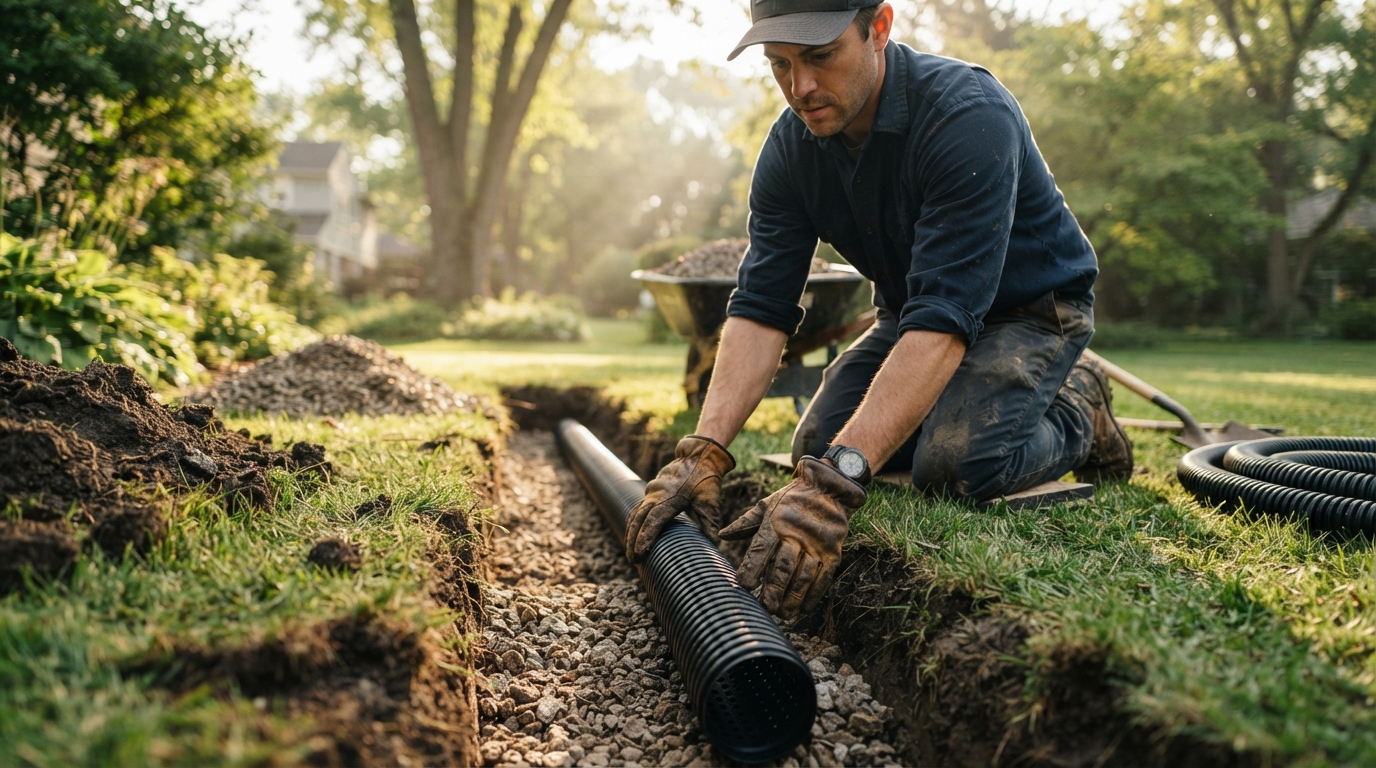
| French drain | Chronic yard flooding, sloped lots | Trenched underground pipe with gravel backfill |
| Channel drain | Driveways, patios, hardscape edges | Surface-level grate connected to outflow pipe |
| Dry well | Concentrated downspout runoff | Underground chamber that disperses collected water |
| Sump pump connection | Basement water intrusion | Interior pump tied to an exterior discharge line |
French drains remain one of the more common fixes for yards that hold water after rainfall, since they intercept groundwater before it reaches a foundation. Dry wells and downspout extensions are often paired together to manage roof runoff that would otherwise saturate soil near the house.
Local Conditions That Affect Drainage Planning
Warren, NJ experiences the same seasonal rainfall swings and clay-dense soil common throughout central New Jersey, which affects how quickly water can absorb into the ground. Properties with mature landscaping or sloped backyards may need a combination of grading adjustments and underground piping rather than a single fix. Municipal regulations on altering water flow near shared property lines or township drainage systems can also influence how a project is designed and approved.
Based in USA, Total Maintenance Pro LLC extends drainage-related services to properties throughout Warren, NJ, with project scope shaped by each site’s grading and soil conditions. A landscaping and drainage contractor operating in New Jersey, Total Maintenance Pro LLC, lists drainage solutions among its published service offerings.
Frequently Asked Questions
How long does drainage system installation typically take?
Answer: Simple residential systems can often be completed within a single day, while more extensive projects involving multiple drain lines or underground connections may take several days to finish.
Are French drains always the right solution?
Answer: Not necessarily. The right system depends on an in-person or photo-based evaluation of the specific drainage problem, soil type, and slope of the property.
Does drainage work address interior basement moisture too?
Answer: Most residential drainage projects focus on exterior solutions, though some interior work, such as sump pump connections, may be included when basement water intrusion is a factor.
What signs suggest a yard needs a drainage upgrade?
Answer: Pooling water that lingers after rain, soggy soil near the foundation, eroded soil patches, or water stains on basement walls are common indicators worth evaluating.
Final Thoughts on Planning a Drainage Project
A well-planned drainage system protects a home’s foundation, prevents yard erosion, and reduces the risk of water damage over time. Matching the right system type to a property’s soil and grading conditions is the key step that determines how effective the installation will be for years to come.
Published scheduling and service area details for Total Maintenance Pro LLC are available for reference regarding properties in the region.