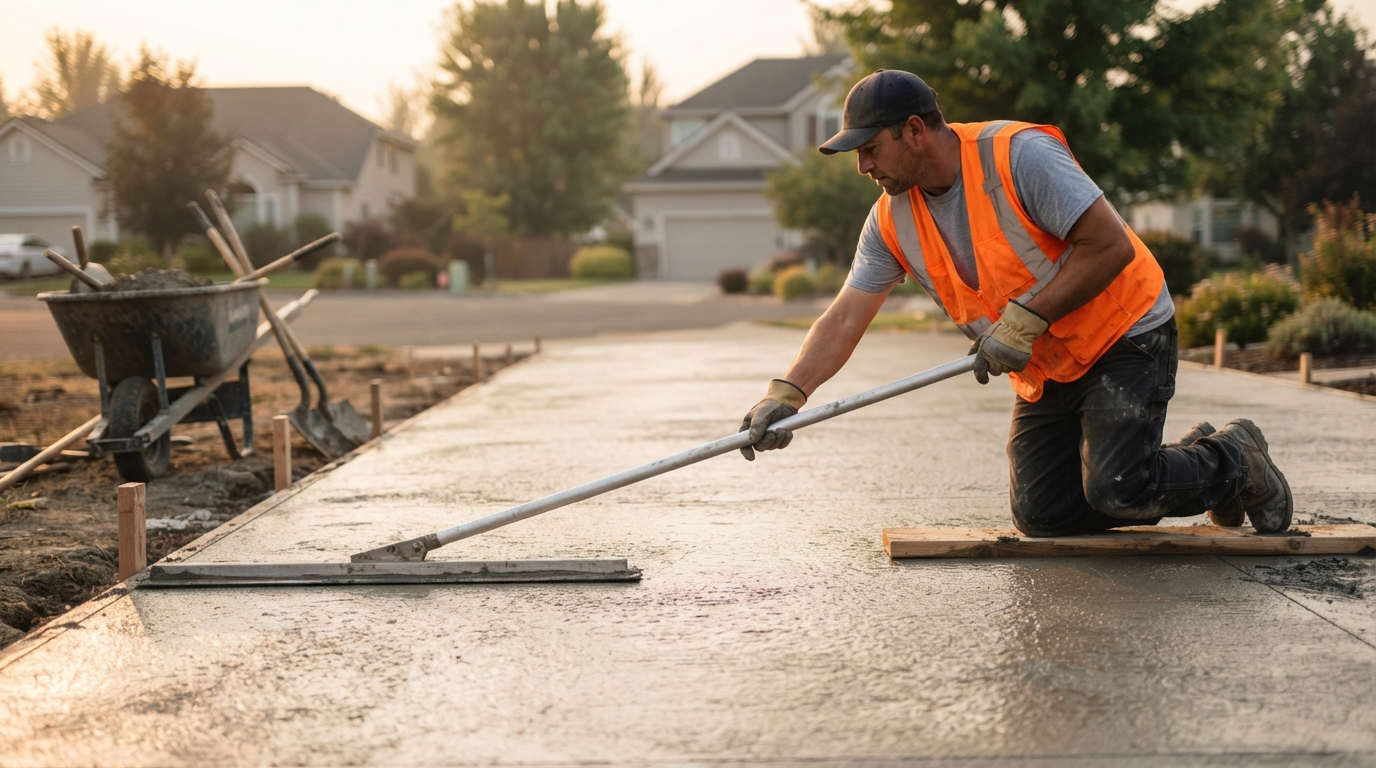
Concrete that cracks, pits, or settles unevenly within a few years usually points to shortcuts taken during site prep or curing, not the concrete mix itself. Hiring an experienced concrete company reduces the risk of those failures by applying consistent grading, reinforcement, and finishing standards on every pour.
Concrete work looks straightforward from the surface, but the steps that determine durability happen before any mix is poured. Soil compaction, moisture control, and rebar or mesh placement all affect how a slab performs over the following decade. Custom Concrete, based in Westfield, IN, serves property owners across Indianapolis, IN, with flatwork and finishing services built on these fundamentals.
Why Site Preparation Determines Long-Term Performance
A concrete slab is only as stable as the ground beneath it. Improper compaction or inconsistent grading is one of the most common causes of cracking and uneven settling in residential and commercial flatwork.
Key preparation steps include:
- Excavating to a consistent depth across the entire pour area
- Compacting the base material to reduce future settling
- Grading for proper water runoff away from structures
- Installing a vapor barrier when moisture intrusion is a concern
Skipping or rushing any of these steps shows up later as hairline cracks, pooling water, or sections that sink faster than the surrounding slab.
Regional Conditions That Affect Concrete Durability
Indianapolis, IN experiences a continental climate with cold winters, humid summers, and frequent freeze-thaw cycles, all of which stress concrete differently than milder climates. According to the National Weather Service, repeated freezing and thawing can cause water trapped in small cracks or pores to expand, accelerating surface damage over time.
Practical steps that reduce this risk include:
- Using properly air-entrained concrete mixes suited to freeze-thaw exposure
- Sealing new slabs to limit water absorption
- Sloping surfaces correctly so water does not pool and refreeze
- Scheduling pours during stable temperature windows rather than extreme cold snaps
These adjustments matter more in this region than in climates with fewer freeze-thaw cycles per year.
Comparing Concrete Project Types
| Project Type | Typical Use | Key Performance Factor |
| Driveways | Vehicle load-bearing surfaces | Base compaction and slab thickness |
| Patios | Outdoor living spaces | Proper drainage and surface sealing |
| Sidewalks | Pedestrian pathways | Control joint spacing to limit cracking |
| Foundations | Structural support | Reinforcement and moisture barriers |
Each project type has different stress points, which is why preparation and finishing techniques aren’t interchangeable across applications.
Questions Homeowners Often Ask
How long does a properly installed concrete driveway typically last?
Lifespan depends heavily on base preparation, mix design, and climate exposure; well-built driveways often last decades when drainage and reinforcement are handled correctly.
Does weather affect when concrete should be poured?
Yes. Extreme heat or cold can affect curing time and final strength, so timing a pour around stable temperatures is standard practice in regions with seasonal extremes.
What causes most residential concrete cracking?
Most cracking traces back to inadequate base compaction, insufficient control joints, or moisture problems rather than the concrete material itself.
Is sealing concrete necessary after installation?
Sealing is not always required, but it reduces water absorption and can lower the risk of freeze-thaw damage in climates with cold winters.
Business Info
Based in Westfield, IN, Custom Concrete serves customers across the Indianapolis, IN area with residential and commercial flatwork services. Verified details about service history and customer feedback are available through its business listing.
Final Notes on Choosing a Concrete Provider
Concrete durability depends less on brand reputation and more on whether proper preparation, reinforcement, and curing steps were followed during installation. Property owners evaluating a provider should ask about base preparation methods, jointing plans, and how a company adjusts work schedules around seasonal temperature swings.
Current service area information for Custom Concrete is published for reference by property owners researching local flatwork options.