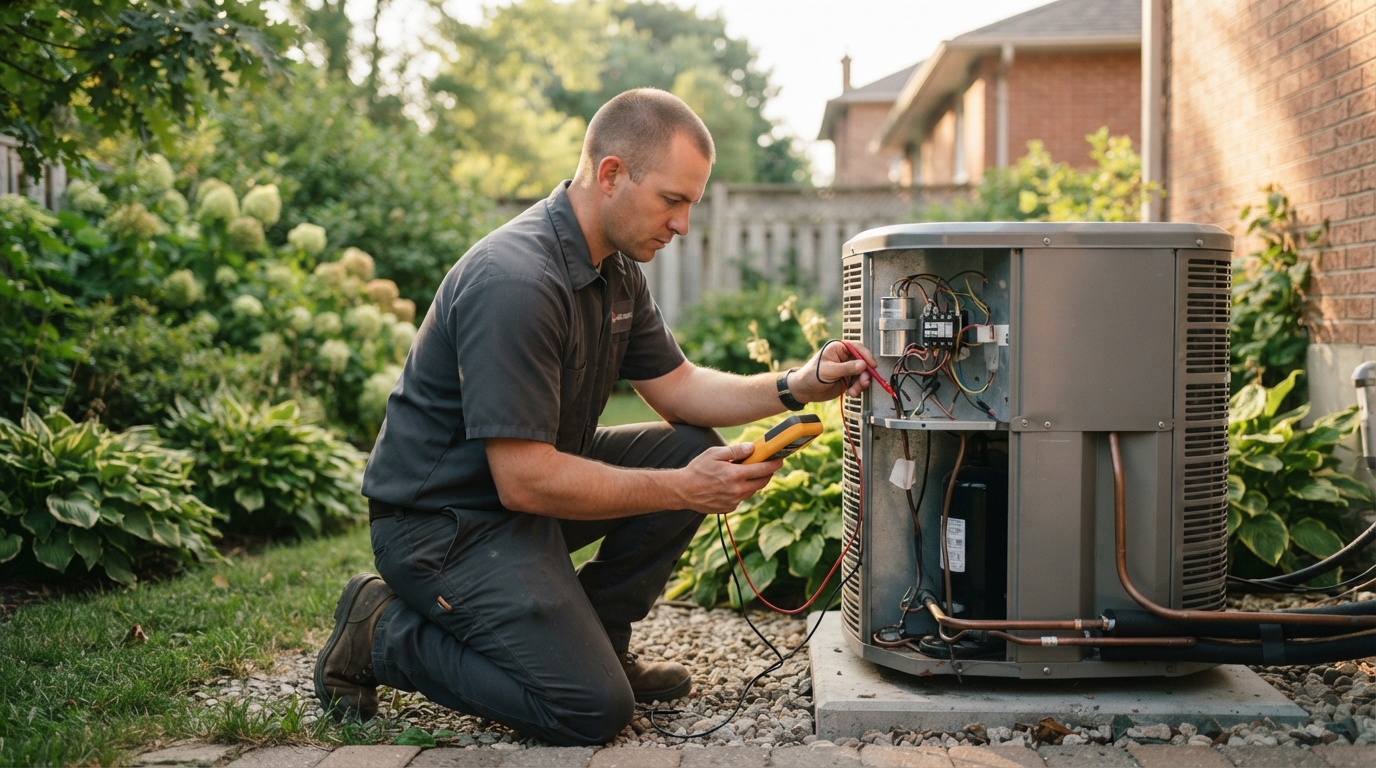
A technician diagnoses the exact cause of a cooling failure, such as a refrigerant leak, electrical fault, or clogged drain line, then repairs or replaces the specific component causing the problem. Most service calls follow the same basic pattern: inspection, diagnosis, and a repair recommendation before any work begins.
Search interest in Air Conditioning Repair tends to spike during the hottest stretches of the year, when a failing system turns from inconvenience to emergency within a matter of hours. Homeowners searching for this term are usually trying to figure out whether a problem is minor (a dirty filter) or serious (a failing compressor), and whether they need same-day help. Understanding what a technician will ask and check can make the appointment faster and the diagnosis more accurate.
Common Signs a System Needs Professional Attention
Not every cooling issue requires an emergency call, but several symptoms point to problems that get worse without attention.
• Warm air blowing from vents despite the thermostat set to cool
• Unusual noises such as grinding, clicking, or hissing from the indoor or outdoor unit
• Water pooling near the indoor unit or a musty smell coming from vents
• Short cycling, where the system turns on and off repeatedly without completing a cooling cycle
• A noticeable jump in the electric bill without a change in household habits
A clogged or dirty air filter is one of the most common and least expensive causes of reduced performance. According to the U.S. Department of Energy, a dirty filter can raise an air conditioner’s energy use enough to justify routine replacement as a first troubleshooting step before assuming a bigger mechanical failure is to blame.
What Happens During a Typical Service Visit
A repair visit generally follows a predictable sequence, regardless of the specific symptom reported.
1. Initial diagnostic check – the technician tests airflow, thermostat response, electrical connections, and refrigerant levels.
2. Problem identification – common culprits include a failed capacitor, a dirty condenser coil, a refrigerant leak, or a blocked condensate drain.
3. Repair estimate – the technician explains the likely cause and the cost of parts and labor before starting work.
4. Repair or referral to replacement – if the system is old or the repair cost approaches the price of a new unit, the technician may recommend replacement instead.
Refrigerant-related repairs deserve particular attention. Federal guidance phased out R-410A installations in new equipment starting in 2025, which means older systems using that refrigerant can still be serviced, but technicians need to confirm the correct refrigerant type before any recharge or repair involving the refrigerant circuit.
Local Considerations for Palm Bay, FL Homeowners
Cooling systems in Palm Bay, FL run for most of the year because of the region’s long warm season, which puts more cumulative wear on compressors, coils, and electrical components than systems in milder climates experience. That extended runtime makes routine filter changes and seasonal checkups more important here than in regions with shorter cooling seasons.
Humidity is another factor specific to this area. High moisture levels accelerate coil corrosion and can contribute to mold growth inside ductwork if condensate drains are not cleared regularly. Homeowners who schedule a professional inspection before peak summer months often avoid the longer wait times that come with mid-season emergency calls.
Based in USA, American Air Conditioning of Boca serves customers across Palm Bay, FL, a relationship that reflects how many regional HVAC providers operate without maintaining a physical branch in every community they serve.
Frequently Asked Questions
How much does a typical Air Conditioning repair cost? Costs vary widely depending on the part involved, ranging from inexpensive capacitor replacements to more significant compressor or coil repairs. A technician can only provide an accurate estimate after an in-person diagnostic.
Is it worth repairing an older AC unit? It depends on the system’s age and the cost of the repair relative to a new unit. Many technicians use a general rule comparing repair cost to the system’s remaining expected lifespan before recommending a repair or replacement.
How often should an AC system be professionally serviced? Most manufacturers and HVAC professionals recommend at least one seasonal checkup annually, with two visits per year common in warmer climates where systems run longer.
Can a dirty filter really cause major problems? Yes. A neglected filter restricts airflow, forces the system to work harder, and can eventually contribute to frozen coils or compressor strain if left unaddressed for extended periods.
Scheduling and Service Details
Published details for American Air Conditioning of Boca outline the areas and service types covered under the current listing.
A properly diagnosed repair starts with recognizing the early warning signs covered above and having that information ready before the technician arrives. Reviewing symptoms, system age, and recent utility bills ahead of time typically shortens the diagnostic process and leads to a more accurate repair estimate.