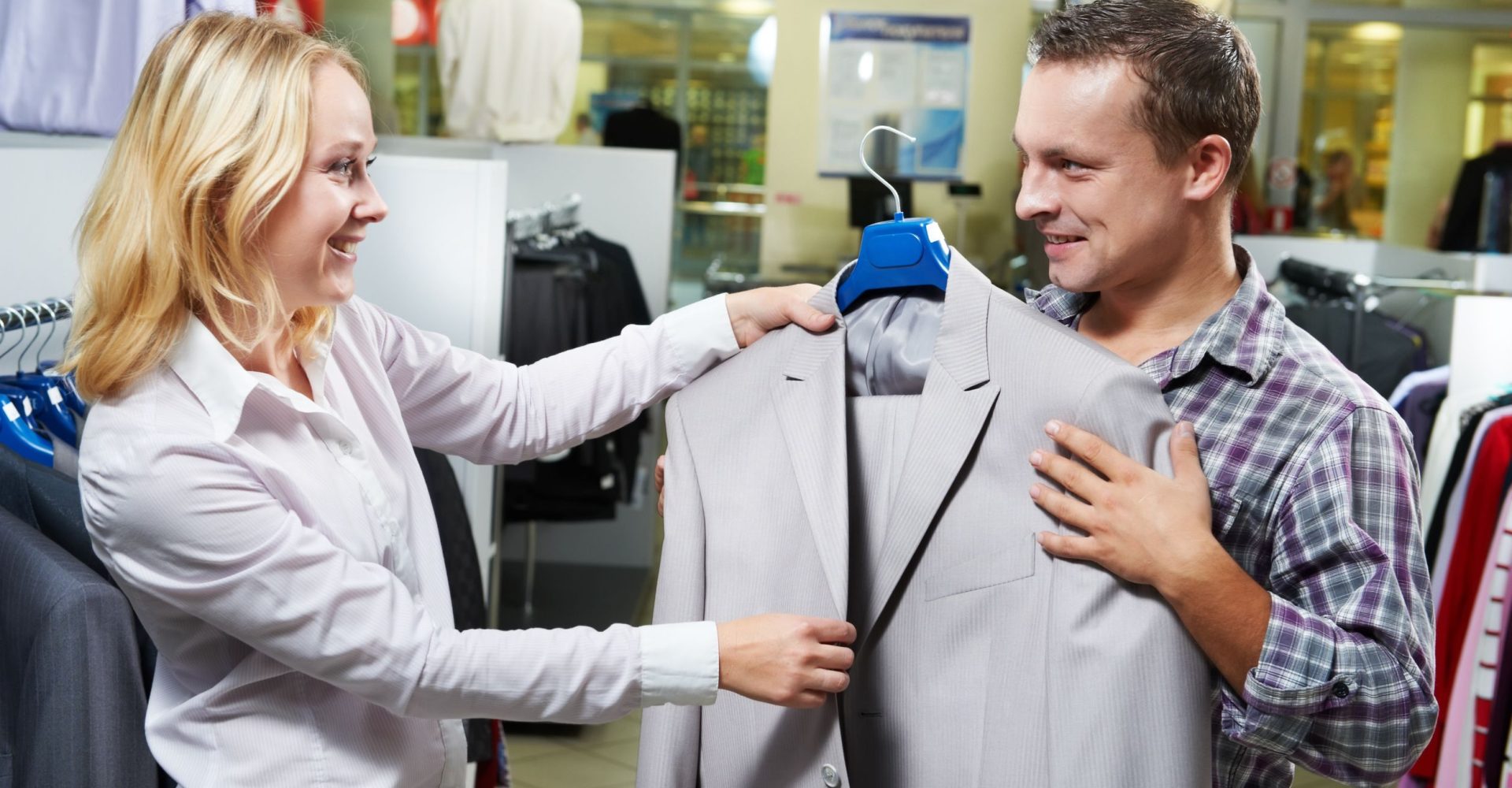
A bespoke suit pattern is created around an individual body rather than relying solely on a standardized size or pre-existing pattern. That allows the cutter to consider characteristics such as posture, shoulder slope, torso balance, arm position, and left-to-right differences when shaping the garment.
This is one of the most technically significant distinctions in bespoke tailoring.
Chest, waist, and sleeve measurements are important, but measurements alone do not fully describe how a person carries their body. Two men can have similar circumferences and heights while standing very differently. One may have square shoulders, another more sloped shoulders; one may stand upright, while another naturally carries the upper body slightly forward.
Those differences affect how fabric hangs.
For someone commissioning bespoke tailoring in Phoenix or elsewhere, understanding pattern balance can make the fitting process easier to appreciate. The objective is not to change the wearer’s body. It is to create a garment whose structure corresponds more closely with the person wearing it.
What Is a Bespoke Suit Pattern?
A bespoke pattern is the individual template used to establish the shape and proportions of a garment.
Unlike a standardized garment built around generalized sizing, bespoke tailoring allows the pattern to begin with the wearer’s measurements and observed proportions. The cutter can then establish the shape of the fronts, back, shoulders, armholes, sleeves, and other areas around that individual.
This matters because tailoring is three-dimensional.
A chest circumference tells a cutter how much distance exists around the torso, but it does not reveal whether the wearer stands upright or slightly forward. A shoulder-width measurement does not, by itself, describe how sharply each shoulder slopes from the neck.
The pattern must translate measurements and observations into cloth.
For a Mens bespoke suit, that process creates an opportunity to address the way the garment needs to sit on one specific wearer rather than treating size as the only fit consideration.
Why Does Posture Matter in Bespoke Tailoring?
Posture changes the relationship between the front and back of a jacket.
Consider two men with similar chest and waist measurements. One naturally stands with the chest relatively upright, while another carries the shoulders slightly forward.
If their jackets were cut to exactly the same front-to-back proportions, the cloth might behave differently on each man.
A mismatch can contribute to effects such as:
- fabric pulling toward the front or back
- excess material through parts of the upper back
- a collar that does not settle naturally
- lapels that do not lie as intended
- jacket fronts that appear to swing away from their ideal position
- an uneven-looking hem
These effects illustrate an important principle: garment balance cannot always be understood from horizontal measurements alone.
The cutter must also think about how the body occupies space.
What Does “Balance” Mean in a Bespoke Jacket?
In tailoring, balance refers broadly to how the different portions of a garment relate to one another when the jacket is worn.
A jacket should appear settled on the body rather than pulled noticeably forward, backward, or toward one side.
Front and back lengths are part of that relationship, but balance is not simply a question of making one panel longer than another. Shoulder position, chest shape, posture, neck position, and other factors can influence how the jacket hangs.
When those variables are considered during pattern development, the goal is a jacket that appears naturally positioned.
This is particularly valuable with bespoke tailored suits, because adjustments can be approached as part of an interconnected pattern rather than as isolated cosmetic changes.
How Does Shoulder Slope Affect a Bespoke Pattern?
Shoulder slope is the angle running from the neck toward the outside of the shoulder.
Some people have relatively square shoulders, meaning that line is more horizontal. Others have shoulders that descend more noticeably.
There can also be differences between the left and right sides.
A jacket’s shoulder area has to correspond closely enough with the wearer for the collar, upper chest, back, and sleeves to settle properly. If the garment expects a different shoulder angle, fabric may wrinkle, lift, or pull.
This is why shoulder slope cannot be reduced to shoulder width.
Two people may have the same shoulder-to-shoulder measurement while requiring different shapes through the upper jacket.
In bespoke pattern drafting, the shoulder line can be considered alongside the wearer’s other proportions instead of assuming that every shoulder of a particular width has the same angle.
Is One Shoulder Usually Considered Separately From the Other?
When a meaningful left-to-right difference affects garment balance, it may need to be considered.
Human bodies do not need to be perfectly symmetrical for clothing to fit well. Small differences are common, and not every variation needs an obvious correction.
The important question is whether a difference changes the way the garment hangs.
For example, one shoulder may sit slightly lower. If that difference causes one jacket side to appear longer or changes the sleeve line, the pattern or construction may need to respond.
This is where bespoke tailoring differs conceptually from simply making every dimension identical on both sides.
The purpose is visual and functional balance, not artificial mathematical symmetry.
How Does Shoulder Position Affect the Collar?
The collar sits at an important junction between the neck, shoulders, back, and front of the jacket.
If the relationship among those areas is not balanced, the collar may show signs of it.
A jacket might sit away from the back of the neck, develop unwanted folds below the collar, or feel as though it is shifting rather than remaining comfortably positioned.
A collar issue is therefore not always a collar-only issue.
The cause may involve posture, shoulder angle, upper-back shape, or another aspect of jacket balance.
Because these areas influence one another, a bespoke pattern gives the cutter a framework for considering them together.
What Role Does the Armhole Play?
The armhole connects the body of the jacket to the sleeve, making it one of the areas where fit and movement meet.
Its shape and position influence how the sleeve hangs and how the jacket responds when the wearer moves an arm.
A bespoke garment must therefore account for more than the circumference of the upper arm.
Shoulder shape, chest proportions, back shape, and natural arm position all influence the relationship between the armhole and sleeve.
An armhole that works well within the overall pattern can help the jacket maintain a cleaner appearance while allowing practical movement.
This does not mean a tailored jacket should behave like athletic clothing. It means mobility should be considered as part of fit rather than as an afterthought.
What Is Sleeve Pitch?
Sleeve pitch refers to the angle at which a sleeve is positioned relative to the jacket body.
Not everyone’s arms naturally hang at exactly the same angle.
Some men carry their arms farther forward. Others have a more neutral or slightly rearward natural position.
If the sleeve’s orientation differs significantly from the wearer’s natural arm position, twisting or diagonal creasing can appear even when the sleeve circumference and length seem correct.
This is why sleeve length alone cannot describe sleeve fit.
Within bespoke men’s suits, arm position can be evaluated in relation to the shoulder and body of the jacket. The intention is for the sleeve to appear consistent with the wearer’s normal stance rather than requiring the person to hold an unnatural pose.
Why Are Fittings Important After the Pattern Is Drafted?
A paper pattern is an informed starting point, not a substitute for seeing a garment on the body.
Fabric behaves three-dimensionally, and fittings allow the relationship between the pattern and the wearer to be evaluated more directly.
During a fitting, attention may be paid to questions such as:
- Does the collar remain close to the neck?
- Do the jacket fronts hang naturally?
- Is the shoulder line clean?
- Does one side behave differently from the other?
- Are there diagonal folds suggesting a balance issue?
- Do the sleeves follow the wearer’s natural arm position?
- Does the jacket remain composed when the wearer moves?
Observations made during the fitting can help refine the garment.
That is why the process is more useful than treating the original set of measurements as a final answer.
Can a Pattern Account for a Forward or Erect Posture?
Postural differences can influence the way the pattern is balanced.
Someone who stands particularly upright presents a different relationship between the chest and back than someone whose shoulders naturally sit farther forward.
Neither posture should automatically be viewed as incorrect.
From a tailoring standpoint, the concern is how the garment needs to accommodate that shape.
For example, a standard pattern designed around a different posture may create excess fabric in one region while pulling in another.
A bespoke approach allows those observations to inform the shape of the garment rather than expecting the wearer to adjust their stance to make the jacket look correct.
The clothing should be made for the person—not the person for the clothing.
Does Posture Affect More Than the Jacket?
Yes.
Although jacket balance makes postural differences especially visible, overall stance can also influence trousers and the way the complete suit appears.
Hip position, natural stance, and the relationship between the torso and legs can affect how trousers settle at the waist and fall toward the shoes.
That means a successful suit should be considered as a whole.
The jacket establishes much of the upper silhouette, while the trousers continue the visual line through the lower body. If both are planned independently without considering the wearer’s natural proportions, the result may feel disconnected.
Bespoke tailoring provides an opportunity to consider those relationships when creating the overall bespoke suit.
Does the Pattern Need to Change If the Wearer’s Body Changes?
Potentially.
A bespoke pattern reflects the wearer’s measurements and proportions at a particular point in time. Significant changes in weight, muscular development, posture, or body shape can affect how a previously established garment fits.
Minor day-to-day fluctuations are different from meaningful physical changes.
Someone ordering another suit after a substantial change should communicate that change rather than assuming the previous pattern needs no review.
The existing information can still provide a valuable reference, but tailoring works best when it reflects the wearer’s current body.
How Should Someone Stand During a Bespoke Fitting?
Naturally.
Trying to adopt an unusually straight or formal posture can make it harder to evaluate how clothing will actually behave.
A person who normally carries one shoulder slightly lower should not deliberately raise it for measurements. Someone who typically stands with a relaxed posture does not benefit from maintaining a rigid stance that will disappear as soon as they leave the fitting room.
A suit will be worn during ordinary movement—walking, standing, sitting, speaking, and interacting with other people.
The fitting should therefore observe the wearer as they really are.
Natural posture provides more useful information than an artificial pose.
Can Bespoke Tailoring Hide Every Physical Difference?
That should not be the expectation.
Tailoring can create visual balance and allow a garment to respond more thoughtfully to individual proportions, but it does not alter the anatomy underneath the clothing.
Some physical characteristics will remain visible, and that is not necessarily undesirable.
Successful tailoring is generally more subtle.
Rather than attempting to disguise every difference, the cutter can use proportion, pattern balance, structure, and garment lines to create a coherent overall silhouette.
The result should still look like the person wearing the suit—only in clothing designed with greater consideration for that person’s actual proportions.
What Should a Client Mention During a Bespoke Consultation?
Clients do not need to know technical tailoring vocabulary.
Practical observations about previous clothing can be more helpful.
Someone might mention that:
- jacket collars often sit away from the neck
- one sleeve frequently looks longer
- jackets tend to pull toward the back
- extra fabric appears near one shoulder
- the front edges of jackets do not hang evenly
- sleeves tend to twist
- one side of a jacket consistently feels different from the other
These observations can give the clothier useful context.
Clients should also explain how the suit will be used. Clothing intended for long professional days may have different practical considerations from a suit commissioned primarily for formal evening events.
The more accurately the intended use is understood, the easier it becomes to evaluate fit in context.
A Bespoke Pattern Is More Than a Collection of Measurements
The defining value of a bespoke pattern is not simply that more numbers can be recorded.
Its real purpose is to translate an individual three-dimensional body into the shapes used to construct a garment.
Posture affects front-to-back balance. Shoulder slope influences the upper jacket. Arm position affects sleeve behavior. Left-to-right variations can influence how the garment settles.
Those characteristics interact.
For that reason, bespoke tailoring is better understood as a process of interpretation rather than a checklist of measurements.
A carefully developed pattern gives the cutter a foundation for accounting for the wearer’s individual proportions while fittings provide opportunities to evaluate and refine how those decisions work in cloth.
For men considering tailoring in Phoenix, understanding that process can also help set more useful expectations. The aim is not universal symmetry or a standardized ideal. It is a suit whose proportions make sense on the person for whom it was created.
About Brothers Tailors
Brothers Tailors is a family-owned men’s clothier at 13843 N. Tatum Blvd. #21 in Phoenix, Arizona, specializing in bespoke, made-to-measure, and other tailored menswear; its team includes professionals identified by the business as Master Tailors and a Master Bespoke Clothier, and the company states that it is a member of the World Federation of Master Tailors. Those interested in visiting the Phoenix shop can Find their office on Google Maps or contact them at 602-494-7736.