Summary first:
• Screen printing creates durable, vivid designs on cotton and polyester blends using layered ink application through mesh stencils.
• The method suits bulk orders for teams, events, and businesses because per-unit costs drop as quantity increases.
• Wilmington, NC shops that work with bulk apparel, including custom t-shirts, typically serve nearby areas such as Leland, NC.
Custom apparel decisions usually come down to durability, cost at volume, and how well a design holds up after repeated washing. Screen printing answers all three by pushing ink through a stencil mesh directly into the fabric fibers, producing color that resists cracking or fading far longer than many digital transfer methods. For anyone comparing options, Screen Printed T-shirts remain one of the most tested and widely used processes for group orders, team uniforms, and branded giveaways.
The process has changed little in its fundamentals even as equipment has improved, which is part of why it remains a default choice for bulk apparel work. Shops that handle screen printing often work with a range of fabric types, since the technique is compatible with cotton, polyester, and blended materials rather than being limited to a single textile.
How the Screen Printing Process Works
Each design starts as a separate stencil, called a screen, for every color used in the final print. A technician applies emulsion to a mesh frame, exposes it with the design, then washes out the areas where ink will pass through.
The printing stage follows a consistent sequence:
1. The garment is loaded onto a flat press board to keep it taut and aligned.
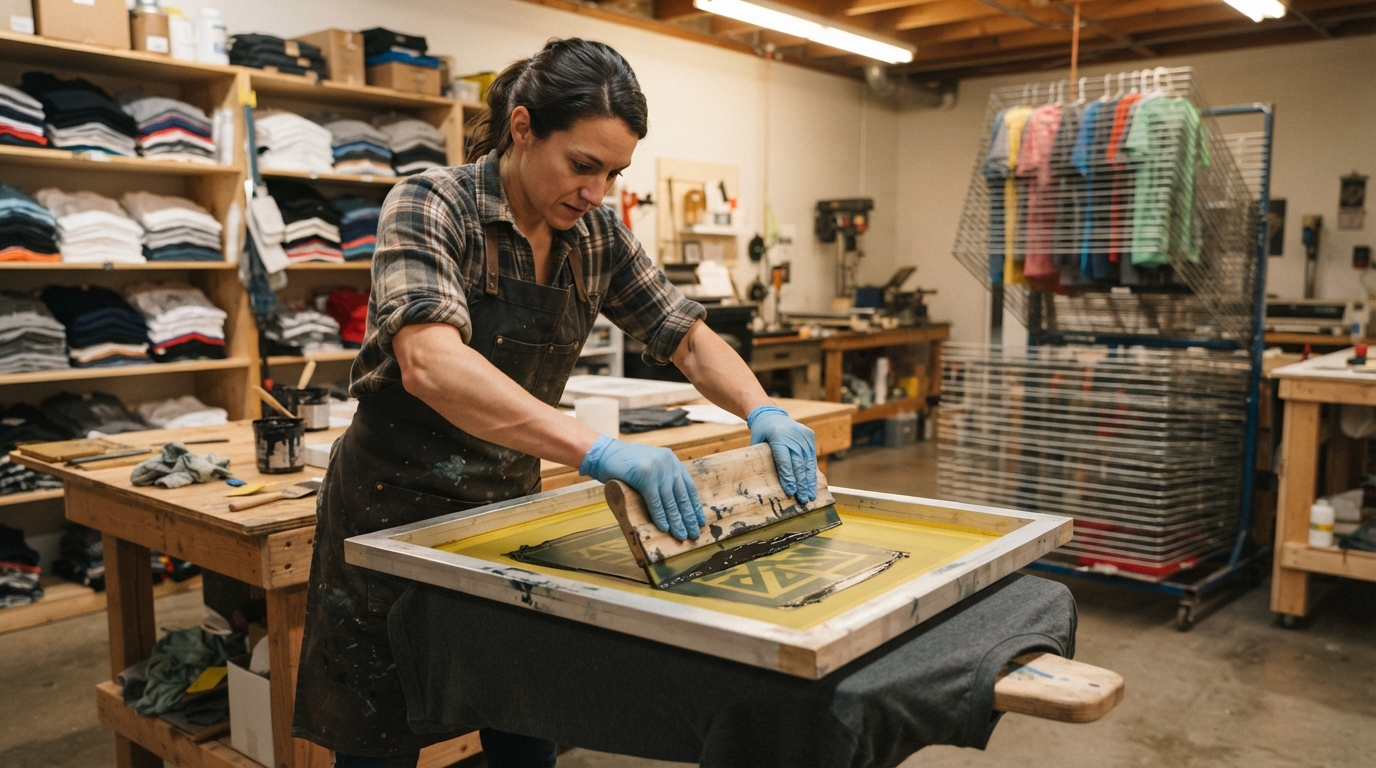
2. Ink is applied to the screen and pulled across with a squeegee at an angle, forcing color through the open mesh areas.
3. Each additional color requires a separate screen and pass, so multi-color designs take longer to set up than single-color runs.
4. The printed garment moves through a heat curing unit or conveyor dryer to set the ink permanently into the fibers.
This layered, color-by-color approach is why screen printing suits simpler graphics and bold logos better than photographic detail, which more often favors digital printing instead.
Screen Printing Compared With Other Decoration Methods
Choosing a decoration method depends on order size, design complexity, and how the apparel will be used. The table below outlines the general trade-offs.
| Method | Best For | Cost at Volume | Design Detail |
| Screen printing | Bulk orders, bold logos, team apparel | Lower per unit at higher quantities | Best with solid colors and simple graphics |
| Direct-to-garment (DTG) | Small runs, photo-detail designs | Higher per unit regardless of volume | Strong with gradients and fine detail |
| Embroidery | Polos, hats, structured garments | Moderate, priced by stitch count | Limited to line-based or simplified designs |
| Heat transfer/vinyl | One-off or small custom orders | Higher per unit at scale | Good for small batches, less durable long term |
Because screen printing setup costs are spread across every unit printed, larger orders generally bring down the price per shirt, which is why it remains common for events, fundraisers, and company apparel runs.
Safety and Quality Considerations in the Shop
Screen printing involves inks, solvents, and curing equipment that require proper handling. According to OSHA’s printing industry guidance, ink preparation involves retrieving containers, mixing colors, and adding thinners, while manual printing requires the printer to hold the squeegee at a specific angle and apply consistent force across the screen.
These handling steps matter for the finished product as well as worker safety:
• Proper curing temperature prevents ink from cracking or washing out prematurely.
• Correct squeegee pressure affects ink saturation and print consistency across a batch.
• Screen and emulsion quality determine how crisp fine lines and small text appear on the final garment.
A shop that follows consistent preparation and curing steps is more likely to deliver uniform results across a large order than one printing each shirt without a standardized process.
Service Area and Local Context
Based in Wilmington, NC, a screen printing provider serving the surrounding region, including Leland, NC, typically handles orders ranging from small team sets to larger bulk runs for organizations and events. Order timelines for bulk apparel can vary with design complexity, color count, and garment availability, so building in lead time ahead of an event date is a practical planning step for buyers in the Leland, NC area. One Wilmington-based provider in this category is Creative ads Screenprinting, which is listed among local screen printing and embroidery businesses serving the greater Wilmington region.
Frequently Asked Questions
How long does a screen-printed design typically last? A properly cured screen print on cotton or blended fabric generally outlasts many iron-on or vinyl transfers, since the ink bonds into the fabric fibers rather than sitting on a surface layer that can peel.
Is screen printing cost-effective for small orders? Screen printing setup costs are fixed per design, so very small orders often cost more per shirt than larger runs; digital printing methods sometimes make more sense for orders under a dozen pieces.
Can screen printing handle multi-color logos? Yes, but each color requires its own screen and separate pass, which adds setup time and cost compared to single-color designs.
What fabric types work best for screen printing? Cotton and cotton-polyester blends are the most common substrates, since they hold ink well during curing without excessive stretching or shrinkage.
Planning for a bulk apparel order generally benefits from comparing timelines and design requirements in advance. Current service details for Creative ads Screenprinting are available for review ahead of placing an order.