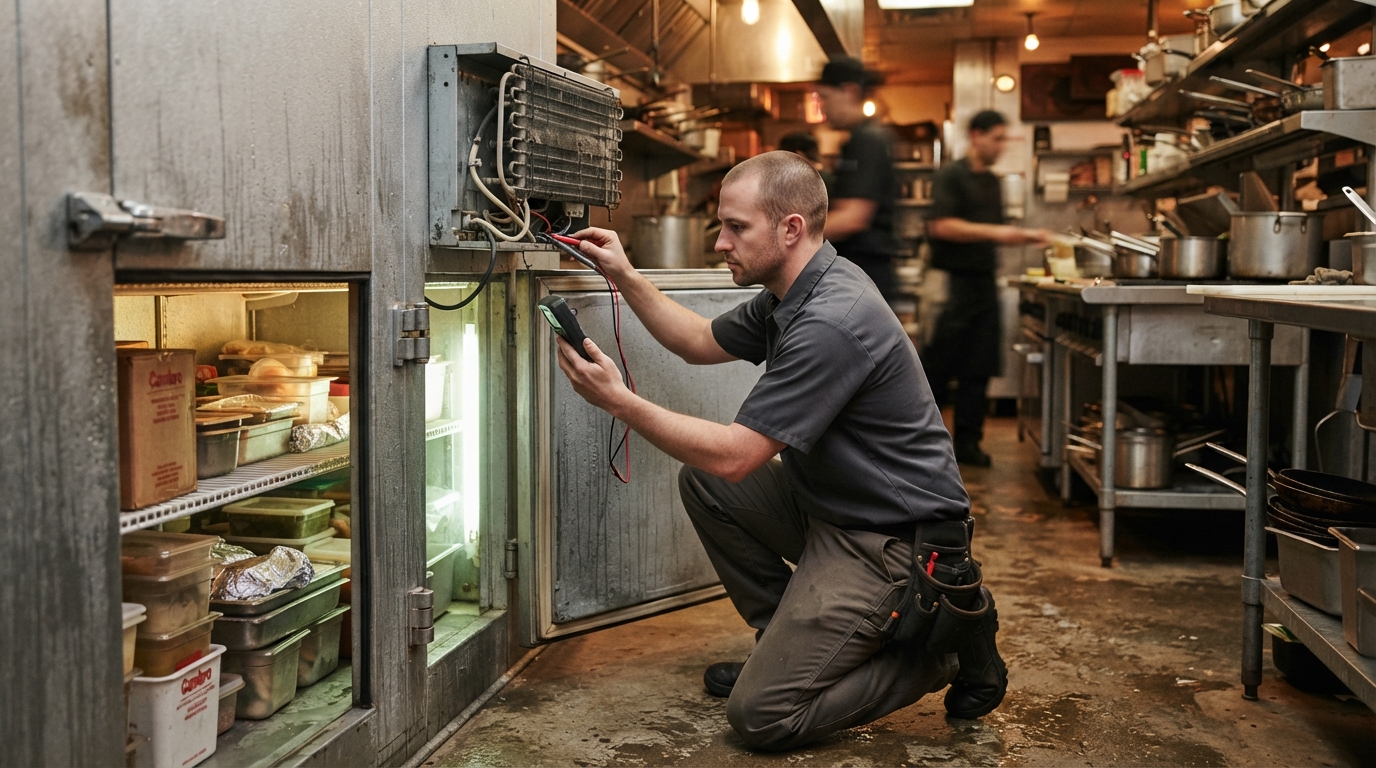
Simply put:
• A commercial appliance repair visit typically includes diagnosis, a repair estimate, and a fix for kitchen or laundry equipment used in a business setting.
• Restaurants, laundromats, and similar businesses rely on this service to keep refrigeration, dishwashing, and cooking equipment running to code.
• Commercial appliance repair in Buda TX is provided by a company based in the USA that serves customers across Buda, TX.
A business owner whose walk-in cooler stops holding temperature or whose commercial dishwasher quits mid-shift needs a technician who understands equipment that runs harder and longer than a home appliance. commercial appliance repairaddresses this gap by focusing on the heavier-duty machines found in restaurants, laundromats, and similar operations rather than standard household units. Knowing what the visit involves helps an operator plan around downtime and avoid guesswork when equipment fails.
What Happens During a Service Call
Most repair visits follow a predictable sequence, regardless of the appliance type.
• Initial diagnosis. A technician inspects the unit, checks error codes or symptoms, and identifies the likely cause of failure.
• Estimate and parts check. The technician explains what needs replacing and whether parts are on hand or require ordering.
• Repair and test. Once parts are confirmed, the repair is completed and the unit is tested under load before the technician leaves.
This structure matters most for refrigeration equipment, since food safety rules are strict about holding temperatures. The FDA Food Code sets cold-holding standards that commercial kitchens must meet, which is one reason refrigeration repairs are often treated as a priority rather than a routine fix.
Equipment Types Commonly Serviced
Verified service listings show that commercial repair work centers on a specific set of equipment rather than a broad catch-all category.
| Equipment Category | Typical Issues Addressed |
| Commercial refrigeration | Walk-in coolers, freezers, and reach-in units not holding temperature |
| Commercial dishwashers | Poor cleaning results, drainage problems, cycle failures |
| Laundromat machines | Washers and dryers used in high-volume commercial settings |
| Wine coolers and specialty units | Temperature regulation for beverage storage |
Restaurant kitchens and laundromats represent the two most common business types served, since both depend on equipment that cannot sit idle for long without affecting revenue or inventory.
Why Commercial Repairs Differ From Residential Work
Commercial units see more daily cycles, carry higher-capacity components, and often connect to different electrical or plumbing configurations than home appliances. A technician working on commercial equipment needs to recognize these differences before attempting a fix.
1. Usage volume – Commercial machines run multiple cycles per day, accelerating wear on seals, motors, and heating elements.
2. Food safety stakes – A refrigeration failure in a kitchen risks inventory loss and potential health code violations.
3. Downtime cost – Every hour a dishwasher or cooler is offline can directly affect a business’s ability to operate.
Buda, TX businesses that depend on continuous kitchen or laundry operations often weigh these factors when deciding how quickly to schedule a repair versus waiting for a slower window.
Scheduling and Service Area Considerations
Operators in Buda, TX typically look for a technician who can respond within a workable timeframe, since many commercial appliances cannot sit unused during business hours. Service area coverage matters because response time affects how long a kitchen or laundromat operates with reduced capacity.
• Confirm whether the service covers the specific appliance brand and type on site.
• Ask about part availability for common commercial components before the appointment.
• Clarify whether temporary workarounds exist while parts are ordered.
Frequently Asked Questions
How is commercial appliance repair different from household appliance repair? Commercial units handle higher usage volume and often operate under food safety requirements, which changes both the diagnostic approach and the urgency of the repair.
What equipment falls under commercial appliance repair? Based on verified service listings, this typically includes commercial refrigeration, dishwashers, laundromat washers and dryers, and specialty units such as wine coolers.
Can a business expect same-day service for a broken walk-in cooler? Availability depends on the provider’s schedule and part access; operators should confirm response timing directly when scheduling, since refrigeration failures are often treated with more urgency due to food safety concerns.
Does commercial repair cover installation as well as repair? Some providers handle both repair and installation for qualifying equipment, though this varies by business and should be confirmed before scheduling.
Operators evaluating service options can review published details for City Appliance Services to understand the listed service area and business information.