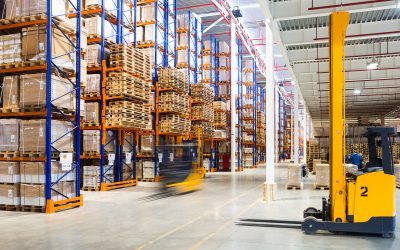
Safety is paramount when working in a warehouse as metal shelving can be very dangerous if it is stacked incorrectly. For many workplaces, injuries are a common occurrence, but this does not have to be a reality for your company. With knowledge, preparation, and a safe layout of your storage facility, you can protect yourself, your company, and your staff members.
The Occupational Safety and Health Administration (OHSA) sites the number one reason for injuries in warehouses is improper stacking. OSHA does not have standards for shelving installation, but it does require proper stacking on shelves.
Shelving must be sturdy and stable enough to hold the desired amount of weight and employers must provide a stable step ladder with hinged back and flat steps for employees to reach items without having to reach over their heads.
What are some of the ways you can safely stack your products on the metal shelving or wire shelving in your facility? Here are six strategies that will help your company remain efficient and safe.
1.Equip your shelves with guard rails and protective posts
Though your fork-lift drivers may be highly trained, that does not mean they will never bump into the corner post of a shelving system. To protect against potential damage and injuries, install reinforced guard rails to your metal shelving systems. These rails, when combined with yellow bollard (or protective) posts, significantly reduce lower safety risks.
Also, reinforcing rack supports is an excellent way to protect your products and staff. Protect yourself with these easy-to-install rails and posts.
2.Anchor your shelving racks to the floor
A common occurrence in warehouses is shelving systems that are not freestanding. This is poor practice and should be avoided. By adding concrete bolts to your shelving system, you can prevent tipping. With simple tools, your staff members can increase the safety and stability of your shelves by bolting them to the floor.
3.Inspect your shelving regularly
To ensure your shelving is still in good condition, perform regular inspections. Upon entering your warehouse, stand at the entrance of each aisle and look for sagging or leaning shelving. Also, note any shelving systems that look strained.
After this cursory inspection, walk through the aisle and watch for any damage (dents, bowing supports, etc.).
For a more thorough search — and expert knowledge — it is recommended to consult an inspection specialist who can highlight any areas you may not know to look for.

4.Do not overfill your shelving racks
Like any other structure, overfilling it can lead to structural failure. OSHA recommends placing plaques or labels that clearly state the load capacities of all your shelving systems. This will alert your staff members, so they remain aware of the limits of your shelving system.
Not only will this practice reduce risk, but it will save your company money because you do not have to replace these shelves.
Also, when your shelving systems are properly loaded, items will be easier to access as they will not be crammed together. This can make your warehouse more efficient.
5.Center loads on the shelves
Like the popular game of our childhoods, Jenga, placing your stock just so on its shelving will prevent a lot of hassle down the road. All forklift drivers should be well trained on the exact placement of differing loads. When these are placed correctly on the beams, there is a much lower risk of injury.
When placing pallets, forklift drivers should never place them on the wire decking as this area is not in line with the support beams. When pallets are placed in the wrong area, capacity is significantly lower, and the risk of injury or damaged stock is high.
6.Use rack guards or netting
To protect your staff members, it is highly recommended to add rack guard or safety netting in case an item should fall. Rather than injuring a person, the netting will catch this item and it can be put back at a later time.
The safety of your staff is paramount as they provide the services needed to run your business. Ensure they are wearing the right protective equipment and their environment is safe.