
Before the Glock 19, the Glock 17 was very popular. However, many users complained that the model 17 proved difficult to carry around due to its size. To make carrying more manageable, Glock made their new handgun with a shorter barrel and grip but maintained the weight of the gun. This modification made the gun more comfortable to carry, especially for law enforcement who carry a gun eight or more hours per day.
The public first saw the Glock 19 for sale in 1988. The Swedish Army adopted it for that country’s armed forces. The U.S. government eventually made the Model 19 the official sidearm of the U.S. Navy Seals, replacing the Sig-226.
The initial design of the Glock 19 in 1986 included several upgrades. Through the years, Glock has added more improvements.
These improvements, combined with Glock’s reputation for quality workmanship and reliability, has made the Glock 19 one of the most popular handguns around the globe.
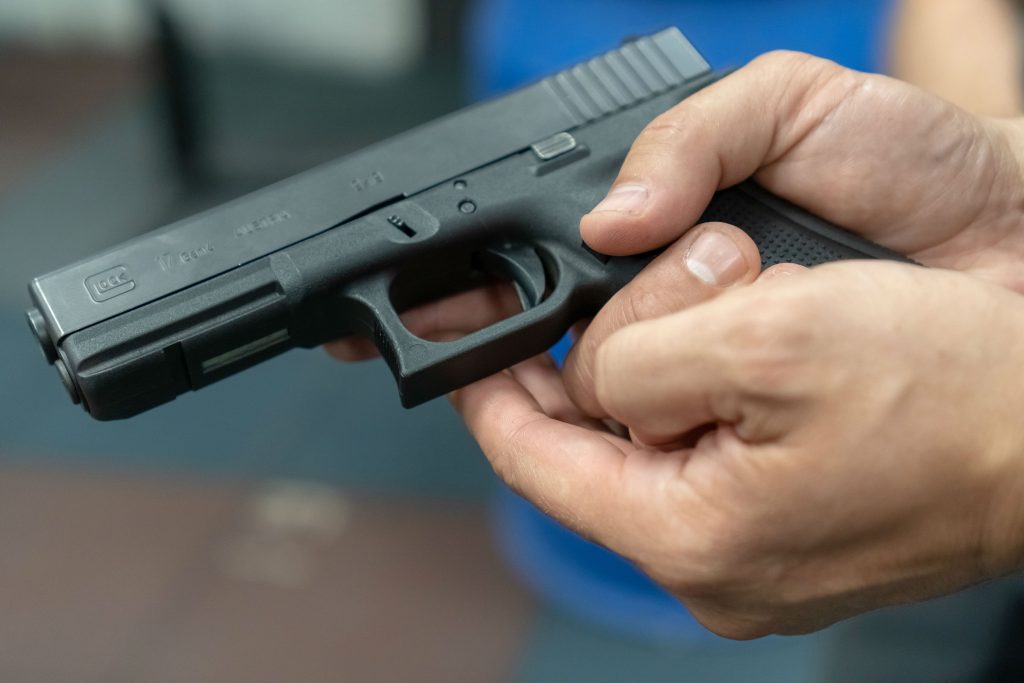
The Beginning: The Glock 17
The company originally made the Glock 17 to compete in the Austria weapon trials. At the time, the Austrian security forces still used the World War 2 era Walther P38.
The Glock 17 won the competition, and since then the weapon has remained an Austrian-Army favorite.
The reason Gaston Glock, the owner of the company, named it the Glock 17 was because of the number of patents the handgun required.
The manufacture of all Glock weapons since then have based their design on the original patented features of the Glock 17.
First Generation Glocks
The company considers first generation Glocks to be those manufactured from 1982-1988: the Glock 17, 18, and 19.
Second Generation
You could buy the Glock 19 and the Glock 17L starting in 1988. The main difference in these models compared to the first generation was that they could chamber more than just the 9mm ammunition. The guns also were not the same length as the original Glock 17.
The second generation Glock 19s and Glock 17Ls could Chamber .45ACP or even .40S&W in addition to 9mm.
The Glock17L has a larger barrel than the Glock 17, but the Glock 19 is an overall smaller version of the original Glock 17.
The second generation magazines were made of metal instead of plastic, and some of the internal parts were slightly modified to make the weapon operate more smoothly.
Third Generation
The third generation of Glocks began in 1996. The biggest change was the upgrade in pistol frames. An accessory rail was added as well as thumb rests on the grips.
The third generation kept the Glock 17 and Glock 19 but added upgrades.
Glock also introduced a lot of new models to the market during this time.
Fourth Generation
The fourth-generation began in 2010 and ended about two years ago. The biggest updates were a customizable grip and a new recoil spring for each Glock handgun. Every person has a different hand size, and the new grip will allow the operator to be as comfortable holding the weapon as possible. The new design also included a recoil spring for a more accurate shot as well as the ability to fire off rounds in rapid succession.
Fifth Generation
The fifth generation includes the Glock 43X and updated versions of many of the most popular Glock guns.
The latest Glock 19, the Glock 19x, has lots of upgrades that the company included in hopes of winning the U.S. Army contract to replace the existing sidearm. This did not happen, and the company released the weapon for sale to the general public.
Concluding Thoughts
The Glock 19 has remained a great handgun. Police departments, militaries, and people all over the world believe Glock manufactures some of the finest handguns ever made.


