If you’re hoping to get into the t-shirt business, or if you want to print custom shirts for a family or business event, you should learn a little bit about the materials and methods you could end up working with.
There are a few different methods out there for making custom t-shirts, but none is as simple and easy to get into as the heat transfer method. Heat transfers can even be done without any professional equipment. For that reason, plastisol transfers are usually where people start when they want to start printing t-shirts.
What Is Plastisol?
Plastisol is made from polyvinyl chloride, commonly known as PVC. You’ve probably heard of PVC before. In fact, PVC is used as a lightweight pipe for household and commercial plumbing. It’s a very resilient material. Obviously, the plastisol transfers that get printed on t-shirts aren’t exactly the same.
Plastisol is essentially PVC with a liquid plasticizer. A plasticizer is just an additive that increases the plasticity of a material. This makes these different materials easier to work with. Plasticizers are even added to concrete so that it’s easier to mix and shape. It also helps strengthen concrete.
The plastisol that’s used in t-shirts is great because it is not water-soluble, and it can be printed in any color while maintaining its opacity. That means that you can use a light color on a dark fabric.
How Is Plastisol Used in T-Shirt Printing?
As noted above, plastisol can be applied to a t-shirt or another garment using a variety of methods. However, plastisol heat transfers are probably the easiest way.
Any logo or design can be printed onto a piece of heat transfer paper. An image or logo that you have on your computer, for instance, can be printed out on this special heat transfer paper. The image will need to be reversed so that it looks correct on the garment.
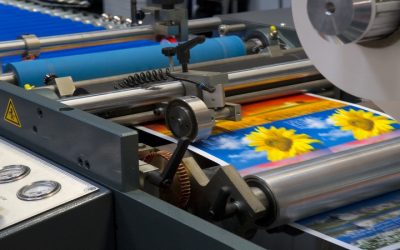
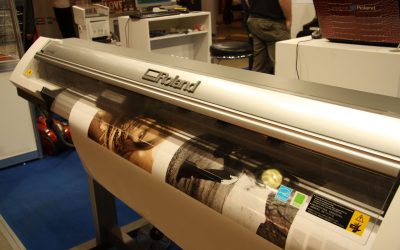
There are both consumer, and professional methods and equipment for the printing and transfer process. Some consumer printers, ink and paper are available for personal use. It’s even possible that your existing printer could print onto a sheet of transfer paper. On the professional end, special printers are used with the plastisol transfer paper.
Once the image is printed on the transfer paper, it’s placed on the garment. From there, it needs to be heated. When the transfer paper is heated, the plastisol melts and seeps into the fibers of the shirt. Once again, this can be done at home using consumer level equipment, or even using an iron. At the professional level, there are heaters that ca be set to the perfect temperature, and then apply the correct amount of pressure in order to get the best transfer.
Next, the transfer paper is removed, and the image stays on the shirt.