Key point:
- Access control systems replace traditional keys with card readers, keypads, or biometric credentials that manage entry door by door and track activity in real time.
- Installation must balance security goals with fire and egress code requirements, particularly around doors that serve as emergency exits.
- Planning that integrates wiring, network hardware, and door hardware from the start tends to produce fewer service calls than add-on installations.
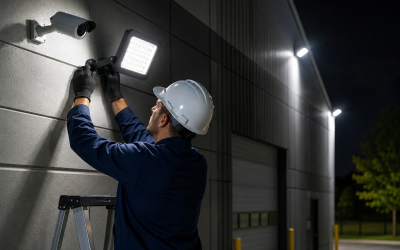
Commercial property managers in Denver, CO are increasingly replacing metal keys with electronic entry systems that log who comes and goes and let administrators change permissions instantly. An Access Control System Installation in Denver, CO typically starts with a site walkthrough to map doors, gates, and existing network infrastructure before any hardware goes in. Smart remote access by CableEx provides added convenience by allowing authorized users to manage access remotely, helping commercial properties maintain greater control over entry points and permissions.
Based in the USA, the company serves commercial customers across Denver, CO rather than operating a storefront in the city itself. This distinction matters for property owners comparing installers, since service area and physical headquarters are not always the same thing in the low-voltage contracting industry.
What an Access Control Installation Actually Involves
Installing an access control system is not a single task but a sequence of coordinated steps. Each phase affects how reliably the finished system performs.
- Site assessment: Technicians review door types, wall construction, and existing cabling to determine what hardware will fit.
- Credential planning: Property managers decide which doors need card readers, keypads, or biometric scanners, and which can use simpler lock hardware.
- Network integration: Access control panels typically connect to structured cabling and a central dashboard, which can run on-premise or in the cloud.
- Testing and commissioning: Every door is tested under normal and power-loss conditions before handoff.
Properties that already have structured cabling and network hardware in place generally see faster installation timelines, since the access control panels can tie into existing infrastructure rather than requiring new runs.
Code Compliance and Life Safety Rules
Any door tied into an access control system that also functions as a fire exit must still allow occupants to leave freely during an emergency. The National Fire Protection Association’s NFPA 101 Life Safety Code sets the baseline rules for means of egress that apply to access-controlled doors in commercial buildings nationwide.
Three principles commonly guide compliant installations:
- Egress doors must unlock automatically during a fire alarm, loss of power, or upon direct approach, so controlled entry never blocks an exit path.
- Door hardware selection needs to keep doors usable under the Americans with Disabilities Act while still enforcing controlled entry for authorized credentials only.
- Any delayed-egress or sensor-release locking arrangement requires signage and specific sprinkler or fire-alarm conditions to remain code compliant.
Denver property managers working on new construction or renovations should confirm these requirements with the local fire marshal, since enforcement details can vary by jurisdiction even when the underlying code is the same.
Comparing Common Access Control Credential Types
Choosing a credential type affects both the user experience and the ongoing cost of running the system. The table below outlines three common options found in commercial installations.
| Credential Type | Typical Use Case | Maintenance Consideration |
|---|---|---|
| Card or fob readers | Offices, multi-tenant buildings | Cards can be lost or shared; reissuing is quick |
| Keypad entry | Secondary doors, loading docks | Codes need periodic changes to stay secure |
| Biometric scanners | High-security areas, server rooms | Higher upfront cost; no credential to lose or share |
Many commercial properties combine more than one credential type across different doors depending on the sensitivity of each area, rather than standardizing on a single method building-wide.
Planning for Vehicle and Parking Access
Beyond interior doors, many Denver commercial properties also manage vehicle entry through gate arms, roll-up doors, or private parking areas. License plate recognition and long-range RFID tags allow these systems to coordinate with building-level access so that parking credentials and employee badges can work together under one platform. Properties with shared parking structures or loading docks tend to benefit most from this integration, since it reduces the number of separate systems staff need to manage.
Frequently Asked Questions
How long does a typical access control installation take? Timelines depend on the number of doors, existing cabling, and whether network hardware needs upgrading, so an accurate estimate generally requires an on-site assessment.
Can access control integrate with existing security cameras? Yes. Access control panels and video surveillance systems commonly share a network backbone, allowing door events and camera footage to be reviewed from a single dashboard.
Do all exterior doors need to allow free egress? Doors serving as part of a building’s required exit path must allow occupants to leave without keys or special knowledge, even when access control restricts entry from the outside.
Is cloud-based or on-premise management better for a small office? Both options are used in commercial settings; the choice generally depends on whether the property prefers remote management or a self-contained local system.
Property managers evaluating installers for a commercial building in Denver, CO can review documented service details through View CableEx’s Google Business Profile before requesting a site assessment.