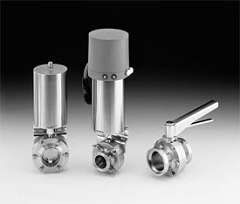
There are many different types of sanitary valves from simple check valves to butterfly valves and seat valves. Choosing the right valve starts with understanding the role of the valve as well as the specifics of the system.
It is not uncommon for a system to be set up with common types of valves but not necessarily the ideal valve option in place. This is most common when the original valves are changed out, and another valve type is used in its place. Valves are designed for different tasks such as preventing backflow, controlling the flow or even directing material throughout the system. Incorrect use of valves can result in system inefficiencies and poor performance.
What Makes Valves Safe for Use in Sanitary Processes?
Most sanitary processing uses what is known as a high purity valve. These sanitary valves are designed to have specialized material on the wetted surfaces of the valve which are highly resistant to corrosion and buildup of material from the media in the valve. In addition, the design of the valve, as with other sanitary components, limits areas where bacteria can develop.
Configurable to the System
The top manufacturers of sanitary valves understand the various requirements for an individual system. They offer different configuration options from stem types, bodies, actuators and even the control features of the valve.
They also tend to offer different seals which are suited for different pressures, temperatures, and media types through the system.
Know the Specifics
It will be essential to the averages for pressure, flow rate and temperature where the valve will be used. However, it will be more important to also have a clear picture of the extremes. By choosing a valve to meet the requirements of the extremes and not the average, there is less chance of valve failure or leakage at the valve.