In brief:
- Spray polyurethane foam (SPF) forms a seamless, lightweight membrane that seals gaps, cracks, and seams on existing roof substrates.
- SPF roofing is recognized for durability, with recoating cycles that can extend a roof’s service life.
- Air sealing and insulation upgrades, including foam roofing systems, are linked to measurable reductions in heating and cooling costs.
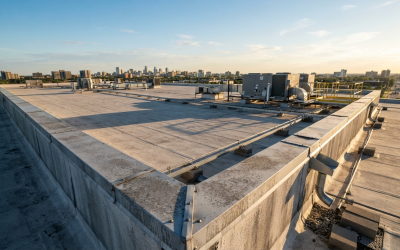
Spray polyurethane foam roofing is a seamless, foam-based roofing system applied as a liquid that expands and cures into a solid insulating membrane. It is most often specified for flat or low-slope commercial buildings because it combines waterproofing and insulation in a single application.
Spray Polyurethane Foam Roofing Ontario CA has become a common topic for commercial property owners evaluating long-term roof performance in the Inland Empire. The seamless application of a spray polyurethane mixture before it expands and turns to foam helps fill any gaps, cracks, and seams on the existing roof substrate, which is one reason the material is frequently chosen for aging commercial roof decks. Property owners in Ontario, CA often compare SPF against built-up or single-ply systems before deciding which option fits their building’s age and roof slope.
- How Spray Polyurethane Foam Roofing Works
SPF roofing starts as a two-component liquid that is sprayed directly onto a prepared roof deck. The mixture reacts on contact, expanding into a rigid foam layer that bonds to the substrate without seams.
Key characteristics of the finished system include:
- A continuous membrane with no joints or seams where water can enter
- A lightweight profile compared to gravel-ballasted or multi-layer systems
- A surface that can be recoated rather than fully torn off and replaced
The durability of an SPF roofing system allows for it to last for over 30 years if it is maintained by being recoated every 10-15 years, a maintenance cycle that differs from the tear-off replacement typically required for asphalt or built-up roofing.
- Energy Performance and Local Relevance for Ontario, CA
Ontario, CA experiences long stretches of high summer heat, which puts sustained thermal load on commercial and industrial roof decks. Large buildings with substantial industrial roof area can benefit from investing in an energy-savings roofing material such as SPF.
Sealing air leaks and adding insulation are consistently linked to lower utility costs. According to ENERGY STAR, homeowners can save an average of 15% on heating and cooling costs, or an average of 11% on total energy costs, by air sealing their homes and adding insulation. While that estimate applies broadly to residential air sealing, it illustrates why a continuous, gap-free roof membrane is relevant to any building’s energy performance.
SPF roofing also carries environmental considerations beyond energy use. This makes it a material of interest for large commercial buildings in a state aiming to reduce emissions, since it can reduce global warming impact compared with other roofing options.
- Comparing Roofing System Attributes
| Attribute | Spray Polyurethane Foam | Built-Up / Multi-Layer Roofing |
|---|---|---|
| Seams | None (seamless membrane) | Multiple seams and joints |
| Weight | Lightweight | Heavier, multi-layer assembly |
| Maintenance cycle | Recoat every 10-15 years | Full replacement at end of life |
| Typical service life | Over 30 years with recoating | Varies by material and climate exposure |
This comparison reflects general industry characteristics of each system type and is not a substitute for a roof-specific assessment.
Based in Bloomington, CA, roofing contractor CRT Roofing Co. extends spray foam roofing work to commercial properties in Ontario, CA. Building owners evaluating a roof replacement or recoat typically weigh current roof condition, building use, and climate exposure before selecting a system.
- Frequently Asked Questions
Is spray polyurethane foam roofing only for commercial buildings? SPF roofing is most commonly applied to flat or low-slope commercial and industrial roofs, where its seamless membrane and insulation properties are most useful for large roof areas.
How often does an SPF roof need maintenance? An SPF roofing system can last for over 30 years if it is maintained by being recoated every 10-15 years.
Does SPF roofing help with energy costs? Sealing gaps and improving insulation are associated with lower heating and cooling costs, and EPA estimates that homeowners can save an average of 15% on heating and cooling costs by air sealing their homes and adding insulation, which reflects the general principle behind SPF’s seamless insulating layer.
What problems does SPF roofing address on an existing roof? The seamless application fills gaps, cracks, and seams on the existing roof substrate, addressing common sources of water infiltration before they expand into larger leaks.
- Business Information
Current service area details for CRT Roofing Co. are published for properties in Ontario, CA.