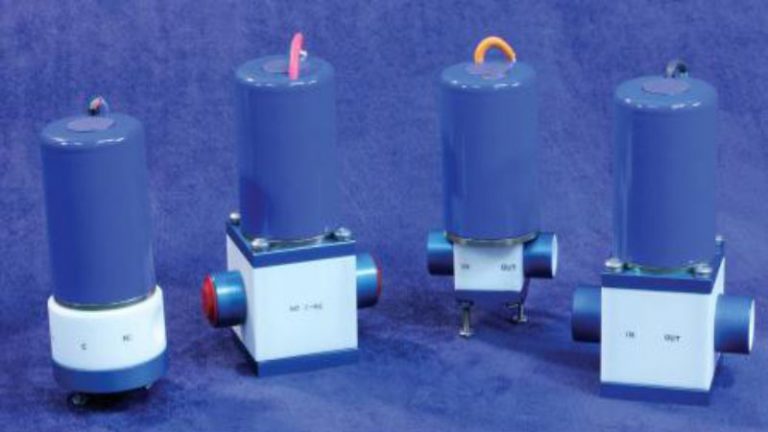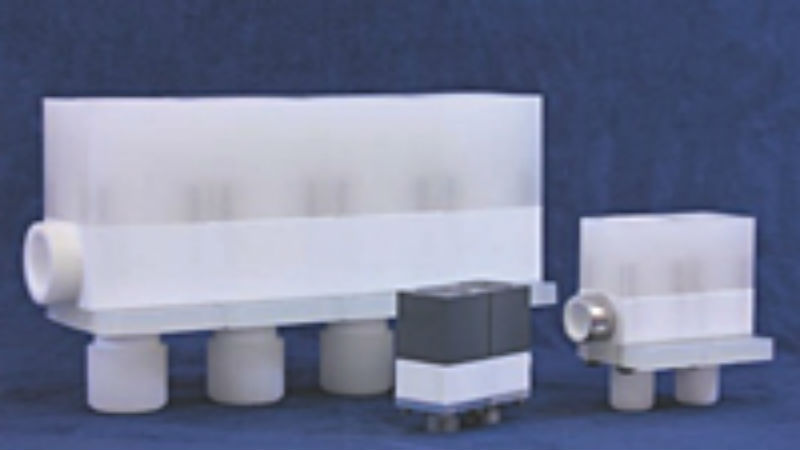
In many types of processes, it is essential to maintain a one-way flow of the media through the system. In these types of systems, backflow due to pressure changes in the system can result in a risk of contamination of the system and, in some cases, a potentially hazardous situation if chemicals in the system come into contact with each other or with system components.
To maintain this one direction flow through the system, chemical check valves are put in strategic locations throughout the system. They are usually installed on the downside of essential components, tanks, and areas of the system. They may also be installed where chemicals mix in the system, preventing any of the mixed media to be able to backflow into the originating pipes.
Material
When choosing chemical check valves, it is important to ensure the material used in the manufacturing of the valve is suitable for the specific combination of chemicals in the system.
While all plastics have some level of chemical and corrosion resistance, some are rated higher for salts, alkali, and acids, which is an important consideration. Additionally, the top chemical check valves use PTFE or polytetrafluoroethylene on all wetted surfaces of the valve, which boost the corrosion resistance and creates a frictionless surface on the interior of the valve.
Valve Specifications
Pressure ratings are another critical factor to consider. This includes the cracking pressure, or when the check valve is required to open or close. This cracking pressure may be as low as 5psi, but it can also be four times that amount given the system requirements.
There are a number of standard sizes of check valves for use in chemical systems. It is also possible to custom design a valve to meet the specific size, pressure and design requirements.