Briefly:
- A dental bridge fills the gap left by missing teeth, using crowns on either side to anchor an artificial tooth in place.
- Bridges restore chewing ability, speech clarity, and facial structure while preventing nearby teeth from shifting.
- Candidates typically have healthy abutment teeth or implants able to support the restoration long-term.
A dental bridge is a fixed dental restoration that replaces one or more missing teeth by anchoring an artificial tooth, called a pontic, to crowns placed on the adjacent natural teeth or implants. This approach closes visible gaps and restores the bite in a way that removable devices cannot always match.
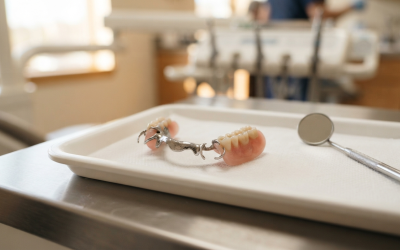
Dental Bridges are a standard restorative option for replacing missing teeth, alongside crowns and implants. Also called fixed partial dentures, they use artificial teeth to fill gaps and restore a natural-looking smile. Unlike removable dentures, a bridge is fixed in place. Unlike implants, which are anchored in the jawbone with a titanium post, a bridge relies on the natural teeth on either side of the gap for support.
What a Dental Bridge Replaces and Why It Matters
Losing even one tooth can affect more than appearance. Partial tooth loss can often contribute to further oral health issues like periodontal disease or dental caries for surrounding teeth. A fixed bridge addresses this by filling the space before neighboring teeth drift out of alignment.
The structure of a bridge is straightforward:
- Pontic – the artificial tooth that fills the gap.
- Abutment crowns – caps placed on the teeth (or implants) on either side of the gap.
- Connectors – the material joining the pontic to the abutment crowns.
A fixed dental bridge typically extends across the area where teeth may be missing, and is made up of artificial teeth fused between two or more abutment crowns. Bridges are held in place by either natural teeth supports from leftover teeth on either side of the missing area or by dental implants that are inserted into the alveolar bone.
How the Restoration Process Typically Works
Most fixed bridges require at least two dental visits. An indirect bridge is fabricated in a laboratory on an impression model of the patient’s teeth, then sent back to the dental office where the dentist cements it in place, requiring a first visit to prepare abutment teeth and a second visit to fix the finished bridge.
Materials used in bridges vary by case. Indirect restorations such as crowns, veneers, and bridges are custom made in a laboratory using techniques like digital design, milling, or 3D printing for precise results, and are used for more substantial damage, often to fully cover or replace the tooth. This lab-based fabrication is part of why fit and bite alignment tend to be precise.
Bridge Types at a Glance
| Bridge Type | Support Structure | Common Use Case |
| Traditional fixed bridge | Crowns on natural teeth both sides | Single or short-span gaps with healthy adjacent teeth |
| Implant-supported bridge | Dental implants | Larger gaps or when adjacent teeth lack support |
| Cantilever bridge | Crown on one adjacent tooth only | Gap with a healthy tooth on just one side |
Function, Durability, and Realistic Expectations
Beyond appearance, bridges play a direct role in daily function. A bridge can help restore the ability to bite, chew, and pronounce certain sounds that become difficult once a tooth is missing. A bridge can replace one or more missing teeth by using neighboring teeth or other supporting structures to hold a replacement tooth in place, restoring part of a patient’s ability to chew and helping fill a visible gap created by tooth loss.
Longevity depends on materials and home care. Fixed dental bridges are a permanent dental procedure and are often costly depending on the type, and they are often susceptible to damage due to daily use and may need to be replaced over time. Routine brushing, flossing under the pontic, and regular dental checkups help extend the lifespan of the restoration.
Based in USA, Aesthetic Dental Center of Hackensack serves patients across Hackensack, NJ, with restorative treatments that include custom crowns and bridges. Information about these services, along with contact details, is published on the Aesthetic dental center of Hackensack website.
Frequently Asked Questions
How long does a dental bridge typically last? Lifespan varies based on material, bite force, and oral hygiene habits, and bridges may eventually require repair or replacement due to daily wear.
Is a dental bridge better than an implant? Each option suits different situations; bridges rely on adjacent teeth or implants for support, while standalone implants replace the tooth root directly without affecting neighboring teeth.
Does getting a bridge require healthy teeth next to the gap? Traditional bridges need stable abutment teeth or implants on either side of the gap to anchor the crowns and pontic securely.
Can a dental bridge affect speech or chewing right away? Most patients adjust within a short period as the bite settles, and bridges are generally designed to restore normal chewing and speech patterns over time.
Next Steps for Exploring Bridge Options
Published scheduling and service information for Aesthetic dental center of hackensack is available for individuals reviewing restorative treatment options.